Learning from political fundraising: dance with the one that brung you

There’s a saying in politics to dance with the one who brung ya codified in Chris Matthews’ classic book of political wisdom called Hardball; “Dance with the One that Brung Ya” is the title of the fourth chapter.  In it, he talks about how Ronald Reagan went to speak at CPAC and gave interviews to conservative papers as a way of remembering from whence he came (and Matthews notices that he got into trouble during Iran-Contra in part because he was dancing with Iran rather than his supporters).

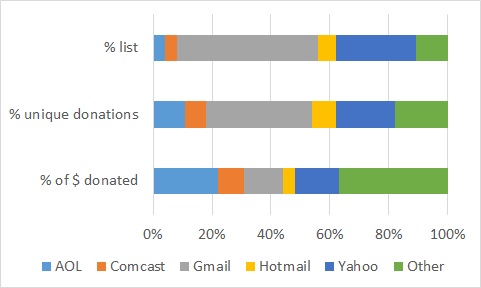
This came to mind for me when I saw a study from Fluent about the makeup of political email lists.

It turns out that while AOL.com email address make up only 4% of political email subscribers, they make up 22% of online political donations.  They are literally over five times more profitable than the average email address.  Gmail addresses are the reverse: they make up 48% of political email addresses, but make up 13% of online political donations.

political donations

You’ve probably seen the jokes about AOL.com email addresses.  If you haven’t, here’s one from the great online cartoonist The Oatmeal.

The addresses have the reputation for representing those who are very out of date or stuck in their ways or (gasp) older.  In fact, the first audience that AOL lists on its advertising list is 50+.  They are the very definition of online uncool and looked down upon by your Web designer who, to stereotype a bit, is likely much younger.

But older donors are the ones that brung ya, and continue to bring ya.  In this extreme case, the 4% of political email addresses that are from AOL are worth (in donations, at least) significantly more than the 48% of political email subscribers that are from Gmail.  For more evidence of this, take a look at why focusing on Millennials at the expense of those who got you where you are is a recipe for disaster

This is even true online.  Those over 60 are just as likely to donor online as those under 40, according to Dunham + Company, and their average gifts tend to be higher.

So how do you cater to the people who are most profitable online?

Test fonts: With an older demographic, font size and clarity are key indicators of success.   While your younger Web designer may be able to read at nine points, your audience may not be able to.  This has a secondary benefit of helping people access and read your sites on mobile devices.  Different sizes work better for different audiences, so test out your site. 

Targeted messaging: Don’t want to pay for a data append to your file, but still want to talk to people about planned giving opportunities?  You could probably do worse than target AOL.com email addresses with this messaging.

Targeted advertising: Often, you only know the basics about a person.  But as long as you have their zip code, you can customize their ask string based on this information.  Just like you could, in theory, target increased asks to AOL addresses because of higher-than-average gifts, there’s also no reason to treat 90210 as the same as 48208 in Detroit.  Yet we persist in having a site with one ask on it at a time.

Offline/online integration: Chances are that you already have these older high-value donors on your file — just not on your email file yet. That’s why it’s important to e-append your offline donor file, as well as asking your offline donors to join your email list. How better to dance with the ones who brung ya than focusing on your longest term donors?

Learning from political fundraising: dance with the one that brung you

Learning from political fundraising: the eyes have it

This week, we’ll look at some of the lessons we in the nonprofit world can learn from those in the political world.

Wait!  Don’t leave!

I know I said that I would be counterprogramming to the blogs that turn out 7 Vital Marketing Lessons from This Year’s Oscar Winners topical content.  But:

  1. There are actually lessons that we can take from the political realm.  If you haven’t read The Victory Lab or Rick Perry and His Eggheads, I strongly recommend them as valuable insights into another industry that relies on donations for its livelihood.
  2. Political fundraising has to be crazy fast and efficient.  Imagine if in November, your nonprofit was going to either win or lose: accomplish all of your goals or cease to exist.  When the stakes are that high, there are distilled lessons that we can benefit from.
  3. It’s only going to get worse and I can’t stomach putting this topic off until December.

So how about this: I will not mention the current (as of this writing) Republican frontrunner despite the potential clickbait. Instead, I’ll try for a nonpartisan look at some items that may be helpful for we nonprofits.

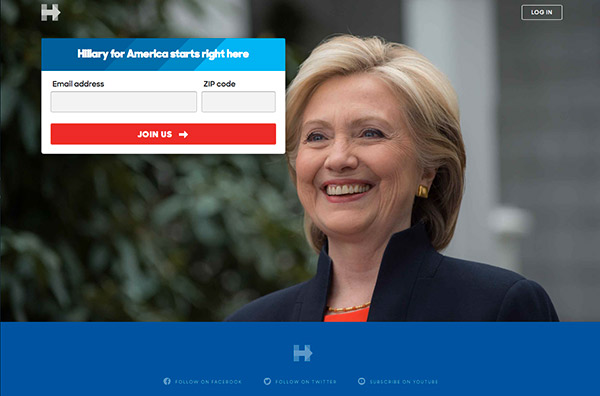
The first one is relatively brief.  In looking at campaign Web sites, take a look at what the candidates’ eyes are doing.  Here’s Hillary Clinton’s Web site — an older version:

hillary-clinton-2016-campaign-website-600


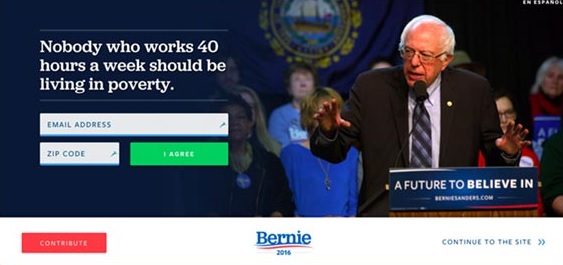
And here’s Bernie Sanders.

berniesmall

What do you notice in common?

The eyes of the candidate are looking at what they want you look at.  This isn’t true in all or even most candidates’ cases: many of them are looking right at the camera or staring off into the future.

But those are missed opportunities.  Studies show that humans automatically look a few discrete places: where arrows or people point* and where other people’s eyes are looking (one such study is here )

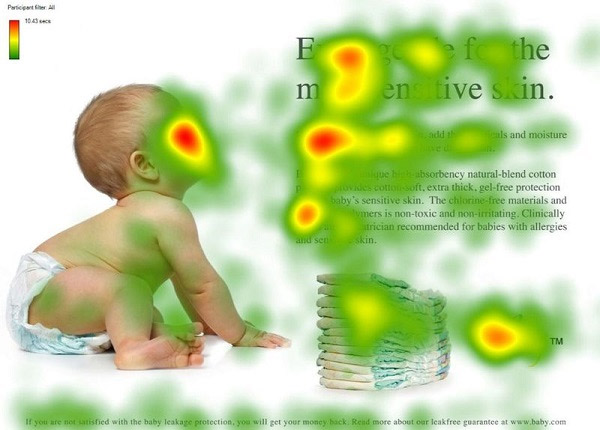
Kissmetrics shows a great heat map of where people look when a photo is looking at the camera. 

7-baby-face

Because the baby is looking at the user, users get locked up in the baby’s eyes with no indication of where they should next look.

Now, take a look where people look when the baby is looking at the text:

8-baby-face-eye-tracking

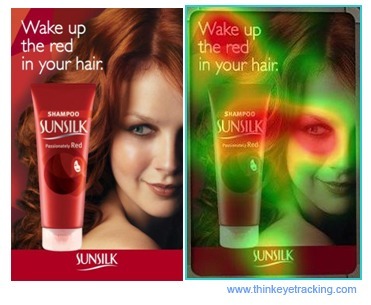
Here’s another good example from QuickSprout.  Looking at the camera:

sunsilk-uncued

And looking toward the product:

sunsilk-cued
So, when Hillary or Bernie are looking at where you put in your email address, guess what the next action is they want you do to.

Now, take a look at your home page.  Where are your pictures looking?  And where do you want people to look?


* Where arrows point: what, you thought this from Clinton’s site is a coincidence?

arrows

Learning from political fundraising: the eyes have it

Always Be Converting Content

glengarry

“Only one thing counts in this life: Get them to sign on the line which is dotted. You hear me? … A-B-C. A-Always, B-Be, C-[Converting].”
— Content marketer extraordinaire Alec Baldwin, Glengarry Glen Ross.

This week, we’ve talked about creating content, selecting topics, choosing a medium, and marketing your content.

But it all starts with the purpose of your content.  I’m going to steal the Content Marketing Institute’s definition of content marketing:

Content marketing is a strategic marketing approach focused on creating and distributing valuable, relevant, and consistent content to attract and retain a clearly-defined audience — and, ultimately, to drive profitable customer action.

It’s obviously written more for a for-profit audience, but you can tell the why from this with those great verbs: attract, retain, and drive.

You want to attract people to your organization.  You want to drive them to take actions that help your cause, including but not limited to donating.  And you want to retain them so that they will do likewise in the future.

So the content you’ve created has to be about them, solving their problems and answering their questions.  Items about you, your mission, your board members, your big check photo, etc., will not fly.

Once you have that content that is valuable and relevant, you need to:

Have one clear call to action.  One.  This eliminates two types of content that don’t convert:

  • Content with zero calls to action.  These are informational pieces that are up on your site because people thought constituents would like the information.  Or discussions of your programs.  Or whatever.  The bottom line is that everything you create should have a point of driving a conversation forward, even if it is only a little bit.
  • Content with various calls to action.  Let’s assume you have helped solve someone’s problem who came to your site.  They are ready for their social mandated moment of reciprocity.  And you give them “You can donate.  Or you can volunteer.  And we have action alerts.  And you can join us on FacebookTwitterInstagramPinterestMySpaceTinderGooglePlusYouTube.”

The advantage of one clear call to action is that you can spend time in the piece setting it up.  If you are educating the reader about how to check their insurance to see what autism treatments it covers, it is a natural segue to ask the person to email their legislator about insurance parity regulation for autism therapies.  A donation ask may be a little clunky there, but you’ve solved the problem and given them a solution that adds to the solution that they wanted when they came to the site: advocating for social change that would also help them.

You can not effectively set up five different asks in your content.

Report back content.  If you are asking people what they want and you give it to them, you need to let them know that it was by their popular demand.  “You asked us for X.  Here’s X” is a great opening to a conversation and your one call to action as a part of X should be very popular.

Make it shareable.  Sharing is often the ask after the conversion that’s forgotten.  Person has read about autism insurance: check.  Person has emailed legislators: check.  What is next for that constituent?  Potentially donating — not the worst idea in the world.  But this person is likely looking for this content for a reason.  And it’s likely that his/her network of close friends would like to be able to to help him with this issue.

So if s/he can say “I emailed my legislator about this and I’d like you to also, because my son is two and isn’t speaking and isn’t making eye contact and insurance doesn’t want to pay for any help,” people who care about this person are going to want to help.

That’s the genesis of a walk team or peer-to-peer fundraising activity right there; it’s just that none of them know it because they are busy solving their problem together.

Other shares, especially for lighter fare like quizzes, are more about the joy of sharing fun content.  Few people will be retweeting the American Constitution Society’s “32 Ways to Live a More Constitutional Life.”

But announcing the results of your “Which Founding Father are You?” (I’m totally a John Adams: single-minded, effective, orator, necessary, incompetent fighter, a bit arrogant, and not nearly cool enough to be in an incredible hip-hop musical.) quiz on Facebook — that could be a way of building interest, then lists.

BTW, American Constitution Society: email me at nick@directtodonor.com: I have this great idea…

Finally, set up the conversion after this one.  There will be another ask, or at least there should be.  Think of every content interaction as a way to get to another content interaction.  Using the change one thing maximum idea, if someone is interested in advocacy, they can get a drip campaign of things around their particular issue, leading them ever closer to the day that they will voluntarily walk up to you and give you the contents of their wallet.

Actually, you will probably have to ask them, but when you have a great converting content strategy, joyful giving can be in your future.

Always Be Converting Content

Marketing your content

Field of Dreams lied to us.  A generation of people were told that if you build it, people will come.  A lie by lying liars.

fieldofdreamsmay06

Also, Iowa, while very nice, is theologically not all that close to heaven.

Similarly, we were told a better mousetrap would cause a stampede of purchasers.  Yet there’s still the one that threatens to sever a digit every time I try to set it.

This is not to say that quality doesn’t matter.  That’s too cynical even for me.  But quality content with marketing will beat quality content without marketing just as surely as a Smith and Wesson beats four aces.

So, how do you market your content?

Search engine optimization.  If you write your content, then sit down to do your search engine marketing, you’ve already lost.  Ideally, you will have already looked through what people are looking for in your category, as we recommended Tuesday.  You will have woven those terms and phrases into your content.  Now, you have a platform from which to further optimize.  Make sure your partners are linking to your content, as link popularity is still a key indicator of quality.  

Similarly, I like to go to other people’s content that is related and complementary to my own and comment on the piece, complementing their content and linking to my own.  Always practice good etiquette when doing this: you want to make sure you are doing as much to promote the person you are commenting on as you are getting, including linking to them from your own content.

Search engine marketing.  If your content is converting well, add it to your Google Grant under all of your relevant search terms.  You want to make sure that people who are looking for your type of content are able to find your specific content.

Social media. Yes, I said yesterday not to create content for social media.  I meant that you shouldn’t only be posting things on Facebook or LinkedIn, where the rules and the audience are not your own.  But as long as you have friends/connections on these platforms, be sure to post your content here, linking through to your own site and resources.

Other content. As you become an effective content creator, you’ll notice that your podcast promotes your blog, your blog promotes your newsletter, your newsletter has a video in it, and that video asks people to subscribe to your podcast.  This is not only natural, but meritorious.  If you’ve taken the idea of fractal content creation, your topics will be related to each other enough that you can legitimately say “if you liked this blog post on conflict diamonds, you might also like to download our white paper on the largest offenders.”

One of the underrated ways for getting nonprofit donations is filling a need for your potential donor.  If, each day, you are only getting donations from the people who intended to give you money at the beginning of that day, you are missing out on significant opportunities.

Rather, a person will come to your site wanting to see if their spouse has the disease your cause is trying to cure.  You will help diagnose the disease.  You offer a brochure about dealing with that disease and the person accepts.  You email them the brochure.  Then, as part of your welcome, you check in with them to see if they need anything else.  They look for, and find, specialists in their area.  Then, after you’ve helped them get what they need, them making a donation to you seems like the most natural thing in the world.

Your content is its own journey: you want to take people through journeys one step at a time.  You can try to plan them, but people will likely choose large parts of it themselves.

To the point we made yesterday, blogs of 400+ posts get more traffic because content supports content.  In the publishing world, when an author has a new book (or in the case of James Patterson, ten new books), sales of their previous books increase because more people are discovering the old books.  So the best part of content marketing is that your content will help your content succeed.

But we also need to make sure your content helps you reach your goal.  We’ll complete our (first) content marketing journey tomorrow, with how to create content that converts.  After all, it’s great that content supports content, but someone has to pay the light bill and vacuum out the Internet tubes every so often.

Marketing your content

Choosing your content marketing media

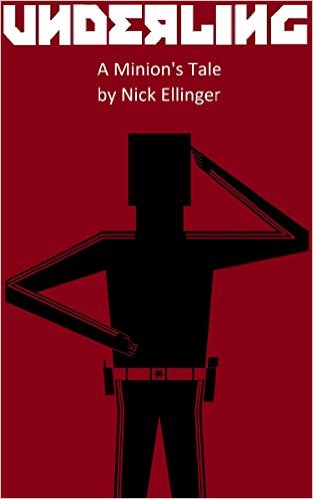
I’m a baaaaad example of content marketing media.  I have a face for radio and a voice for print, so you’ll notice there aren’t videos, Webinars or podcasts here yet.  I have less than no artistic talent, so infographics are well beyond me (for now; one can always learn).  Don’t believe me?  Here’s the cover I designed for my book:


underling

I suppose I could do slideshows, but since I started this blog in part to improve my writing, I’ve been a strictly one medium guy.

But you can’t be.  There are a whole work of ways to reach an audience today and depending on your mission, some, many, or all of them may work well for you.  However, each one takes a toll of time and effort.  It is better to be the master of one medium than a jack of all of them.

Blog posts

Advantages:

  • I would argue that this is the easiest entry point.  You need to write a story.  That’s it.
  • A great way of (as I mentioned yesterday) figuring out what your audience(s) is/are interested in.
  • Can serve as a host and/or a marketing platform for your other content marketing.

Disadvantages:

  • Difficult to capture an audience.  Sure, you can have an awesome weekly newsletter than anyone can sign up for here, but no matter how blatantly you name check it in the middle of a blog post, most people read blog posts individually rather in binge reading.
  • Need to do it regularly enough that people can expect new content from you.
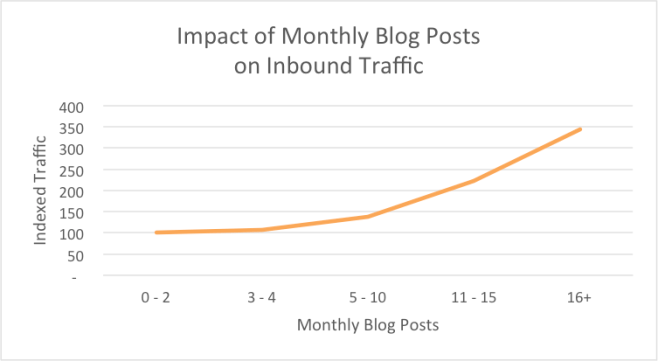
  • Need it do it often enough to be successful.  Hubspot has some great data here that show that posting 16+ times per month gets you the most traffic:

blog_monthly_traffic


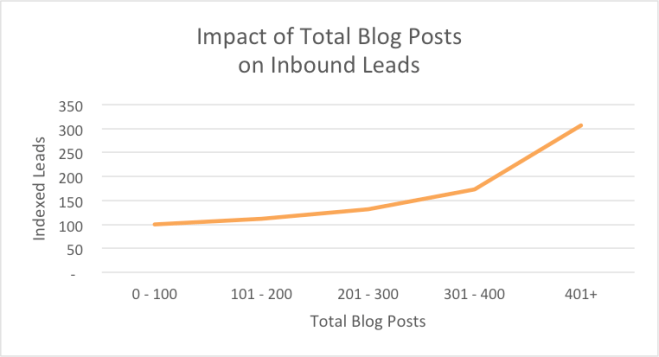
Furthermore, having 400+ blog posts significantly increases your traffic as well:


blog_total_leads

Podcasting

Advantages:

  • Good for when you have two personalities that can play off of each other.
  • Excellent way to incorporate guest contributors.
  • A very popular medium right now.

Disadvantages:

  • Take whatever time you think it will take to edit the audio for your first podcast and multiply it by ten.
  • Very production-value-dependent.  It used to be that people will put up with poor audio quality to get good content.  This is less and less true.
  • Needs to be even more regular than blogging.
  • Difficult to capture an audience, as you don’t have a record of who subscribes to your podcast.

Video

Advantages:

  • Great for people with compelling visuals.
  • You can repurpose existing assets with a little bit of editing and voice over.
  • Guest appearances become a bit easier; there’s something about a video camera that makes everyone want to be on TV.
  • YouTube is a valuable quasi-social network that allows you to be discovered by people who might not come to your site.

Disadvantages:

  • It requires some editing skill and expertise (compared with blogs, which any idiot can write)
  • A talking head looking into the camera is the most common and most boring possible video.  Sometimes it’s necessary, but hopefully you can surpass that.
  • You may do 100 videos that have almost no views; it may be that 101st that gets an audience.

Infographics

Advantages:

  • Great way to communicate complex concepts.
  • Very shareable.
  • Good adjunct to other content (e.g., if you have a complex white paper and are trying to pitch media, an infographic can help with the pitch to explain to people whose journalism majors did not cover microbiology or environmental sciences or whatever (of course, neither did my poli sci degree, so I can’t talk))
  • Who doesn’t love a picture?

Disadvantages:

  • Some infographics are now just numbers with a circle around them or some other gussying up.  Steer clear of the infographic if the pictures aren’t going to add value to the story.  Sometimes a pie chart is just a pie chart.
  • Requires graphic design knowledge.
  • Lacks interactivity and, usually, emotional content.  All of the other media can bring you to tears or to donate.  Infographics are good for the brain, but usually not good for the heart.  And the heart is what donates most of the time.

Quizzes

Advantages:

  • Fun for the whole family
  • Very shareable, especially if you make it so that people can be competitive.
  • Who knows?  Someone might learn something.
  • Can pique interest and encourage someone to learn more.

Disadvantages:

  • A bit fluffy for content — can’t get deep into an issue (which is probably OK; that’s not why someone takes a quiz)
  • Doesn’t convert particularly well.

Whitepapers:

Advantages

  • As mentioned yesterday, they are easy to create from existing content.
  • Excellent for lead generation, because you can email gate them.
  • Demonstrates subject mastery, whether justified or not.

Disadvantages:

  • Can be a bit dry when done poorly
  • More difficult to incorporate emotional content.

Print:

Advantages:

  • Not dead
  • Less competition, because people don’t believe the first bullet
  • More engaging than online content
  • Can engage in conversations, rather than dialogues
  • Can effectively get donations

Disadvantages:

  • Have to explain to people print isn’t dead
  • Cost
  • Less ability to track and capture interactions

And here are a couple I recommend against.

Slideshows:  A lot of folks do these.  I have to admit, I don’t get it.  It’s certainly easy to do, as you have the slideshow in the can already.  It’s good for a business audience, who is used to the format, and gets a lot of data out quickly.

However, it requires someone to want to sit through a PowerPoint presentation without the entertaining audio.  There’s not usually a good conversion mechanism.  And, as you know, the worst live presentations are the ones where people have all of their words on a slide and have to read them off.  These are, ironically, the only decent slideshows, because if someone relied on funny images for their original presentation, it won’t read without audio.

For my money, these are better done as a white paper if you have a dry topic (because you can get email addresses) or a video if you have a lively one.

Social media: By this, I mean posting on Facebook or LinkedIn or what-have-you, so that they own your content.  Don’t do this.  It’s all fine and dandy until someone changes the algorithm or your rules for sharing or your organic reach and your so-called strategy is lost.

Actually, it’s not fine and dandy, because even when things are going well, you are building an audience for that social network, not for yourself or your organization.  Social media is a fine place to link, but I wouldn’t want to live there.

So those are the basic media.  But once you build it, they won’t necessarily come, so you will need some good marketing strategies for your content marketing.  We’ll cover that tomorrow.

Choosing your content marketing media

It’s time to stop… dense wads of text only

I’m going to be a bit of a hypocrite here, as giant, dense wads of text are kinda my specialty.  But it’s also something we need to stop doing.

This is because dense text is hard to read and understand.  One study (that I couldn’t find live, but here it is in the Internet archive) shows this clearly.  There are a few key points:

  • Bullet points help break up text and make it more readable.  Hence why I’m doing them here.
  • Space between lines makes text more readable
  • White space around text makes it more readable
  • Good margins are key

This is all the same content.  It’s just a matter of how it’s presented that makes it understandable.

That makes me think that if they did those dense Russian novels in a children’s book format with a sentence on each page, more people would get through them than in the current 8-point font printed on a brick with pages.

But maybe this is just because I would love to see what Dr. Seuss would draw next to “All happy families are alike; each unhappy family is unhappy in its own way.”

Anyway, readability is important because it’s more retainable and persuasive.  Since we are in the business of persuasion, getting our readability up and the pain that people have in reading our materials down is vital.  One study found specifically that bulleted lists specifically help increase readability and average gift.  It also found that only 19% of letters used this technique, so bullet away!

The big point here is ignore readability at your peril — it helps cause people to give.  That includes white space and that includes pictures.

Humans seek out faces and we seek out eyes specifically.  There’s a reason that people think there’s a man in the moon — our pattern recognition systems see two circles and a line and assume it’s a face.

Pictures of what you are doing can have a significant impact on the emotional state of your potential donor (as well as breaking up big blocks of text…)

Like this picture of a kitten.

Come and meet Maggie!

Anyway, because of our fixation on eyes, there is a particular trick you can use online, which is to have the picture of your person looking at or pointing at your donate button.  If you heat map your site, you will generally see people look at the eyes of the pictures of people, then look automatically to see what they are pointing at.  A seemingly random trick, but it works.

(If I were smart, I would have this kitten looking at the isign-up for the weekly e-newsletter here.  But there’s only so much Googling of kitten pictures I’m going to do today.)

So make sure that when you design, you are incorporating space, using bullets, using photos — almost anything to avoid making your letter or email look like a wall of text.  Like, for example, this post.

It’s time to stop… dense wads of text only

It’s time to stop… vanity metrics

I’m writing this during the South Carolina Republican primary.  The votes haven’t started being counted yet, but I know who is going to win.  Because I know that Ben Carson has 35% of the Facebook likes among GOP contenders in the state; Trump is second at 25%.  Thus, Carson will get approximately 35% of the vote.

What?  Doesn’t it work that way?  Facebook likes aren’t a reliable indicator of support, donations, interest, or almost anything else?

The bitter truth: Facebook likes are a vanity metric.  They have little to do with your ultimate goal of constituent acquisition, donor conversion, and world domination, yet people will still ask what that number is.  And when they hear it, they will nod, say that that’s a good number, and ask what we can do to increase it.

That’s when a tiny little part of you dies.

So, in our Things To Stop Doing, we have vanity metrics.  These metrics may make you feel good.  They may be easy to measure.  And some of them may feel like a victory.  But they bring you little closer to your goals.  We are creatures of finite capacity and time, so the act of measuring them, talking about them, or (worst of all) striving for them drains from things that actually matter.

Facebook likes and Twitter followers are probably some of the better-known vanity metrics.  But they are far from the only ones.  And while some of these are partly useful (e.g., Facebook likes is an indicator of a warm lead repository for marketing on the platform), there’s almost always a better measure.

Because it always comes back to what your goals are.  Usually, that goal is to get people to take an action. Your metrics should be close to that action or the action itself.

Without further ado, some metrics to stop measuring.

Web site visits.  Yes, really.  This is for a couple of reasons:

  1. Not all visitors are quality visitors.  If you’ve been using Web site visits as a useful metric, and wish to depress yourself, go to Google Analytics (or your comparable platform) and see how long visitors spend on your site.  Generally, you’ll find that half or more of your users are on your site for more than 30 seconds.  Are 30 seconds long enough for people to take the action you want them to take on your site?  Not usually (except for email subscribes).

  2. Not all visitors are created equal.  Let’s say you find that people coming to your site looking for a particular advocacy action sign up for emails 10% of the time; those who come looking for information about a disease sign up 5% of the time; those who look for top-line statistics sign up 1% of the time.  Which of these is the most valuable visitor?

    This isn’t a trick question.  You would rather have one person looking for advocacy actions than nine people looking for stats.  Except that the metric of Web site visits lumps them all into one big, not-very-useful bucket.

These are both symptoms of the larger problem, which is that if you had to choose between two million visitors, of whom 1% convert, and one million visitors, of whom 3% convert, you’d choose the latter.  Thus, potential replacements for this metrics are visits to particular pages on the Website where you have a good idea of the conversion rates, weighted Web traffic, and (most simply) conversions.

Mail acquisition volume.  You get the question a lot – how many pieces are we sending in acquisition?  Is it more or less than last year?  And it’s not a bad estimate as to a few different things about a mail program: are they committed to investing in mail donors?  Is the program growing or shrinking?  What are their acquisition costs?

But from a practical perspective, all of these things could be better answered by the number of donors acquired (and even better by a weighted average of newly acquired donors’ projected lifetime values, estimated from initiation amount and historical second gift and longer-term amounts, but that’s tougher).  A good rule of thumb is:

Never measure a metric that someone could easily game with a counterproductive action.

And you can do that with mail acquisition volume by going on a spending spree.  Of course, you can also do that with donors acquired, but it will spike your cost per donor acquired, which you are hopefully pairing with the number of donors acquired like we recommend in our pairing metrics post.

Time on site.  You notice that people are only spending an average of 1:30 on your Web site, so you do a redesign to make your site and content stickier.  Congratulations – you got your time on site up to 2:00!

Someone else notices that people are spending 2:00 on your Web site.  They work to streamline content, make it faster loading, and give people bite-sized information rather than downloading PDFs and such.  Congratulations – you got your time on site down to 1:30!

Therein lies the problem with time on site – whatever movement it makes is framed as positive when it could be random noise.  Or worse.  Your sticky site may just be slower loading and your bite-sized content may just be decreasing conversion.

So another rule of good metrics:

Only measure metrics where movement in a direction can be viewed as good or bad, not either/both.

Here again, conversions are the thing to measure.  You want people to spend the right amount of time on your site, able to get what they want and get on with their lives.  That Goldilocks zone is probably different for different people.

Email list size.  While you totally want to promote this in social proof (like we talked about with McDonalds trying to get cows to surrender), you actually likely want to be measuring a better metrics of active email subscribers, along the lines of people who have opened an email from you in the past six months.  These are the people you are really trying to reach with your messaging.

When you remove metrics like these from your reporting or, at least, downplay them, you will have fewer conversions with your bosses that ask you to focus on things that don’t matter.  That’s a win for them and a win for you.

I should mention that I am trying to build my active weekly newsletter subscribers.  Right now, we have an open rate of 70% and click-through rates of 20%+, so it seems (so far) to be content that people are enjoying (or morbidly curious about).  So I’m hoping you will join here and let me know what you think.


It’s time to stop… vanity metrics

Anchoring, ask strings, and the psychology of first impressions

One of the most talked about cognitive biases, for online donations especially, is anchoring. Anchoring means we rely on the first piece(s) of information we get about something more than the last.

Where this comes into play most often, and intuitively, for nonprofit direct marketers is in ask strings. People tend to key on the first value of the ask string most. Ordering your asks from high to low will increase your average gift and decrease your response rate; low to high will do the opposite. In our The Science of Ask Strings post (which is currently the most visited post on the blog, so don’t be left out (we talked about fear of missing out yesterday…)), we saw single givers were more pliable on the anchor than multi givers. Single givers receive an anchor from you; multi givers have their anchor already in their minds.

This piece of information doesn’t have to be an all relevant. People were asked to recall the last two digits of their Social Security number, then tell how much they would pay for an item. Those with higher numbers gave higher prices by 60-120 percent. This is why if you have a focal point number in your piece, it’s good to make it higher than your average gift. If you usually say four people die every hour, move it to 96 people die every day; that 96, if highlighted, will ask as an unconscious anchor on giving.

Anchoring can tie very deeply to social proof. If you give people the impression that most people are doing a thing, that’s an anchor. If you give the impression that most people don’t give, that also is an anchor for not giving. Last time, I picked on Wikipedia’s fundraising for this; now it’s Charity Navigator’s turn:

CN social proof2

I think they think they trying to anchor people to give $50 or more and they may be increasing their average gift with this because of this. However, when the first thing I hear is that less than one percent of people give to Charity Navigator, I’m less likely to give. Or I would be if my personal likelihood were not already a negative number.

The anchoring/social proof crossover also supports letting people know what the average person like them donates. As you might guess, people who have their anchor set by social proof higher give more. What this study found is people are more influenced by what their in-group was doing than their out-group and thus more anchored by their giving. Thus, I would bet good money that “most people give X” beats no anchor and that “most Texans (or whatever) give X” beats “most people give X,” because it’s a closer in-group.

This also manifests in peer-to-peer fundraising. It’s vital to educate fundraisers that the most important gift they get will be their first one (ideally, the one they give to themselves). If that first gift is $100, they will almost certainly raise more than a person who gets a $10 initial gift. Since peer-to-peer fundraising is more giving to a person than giving to a cause, people want to know what a socially acceptable donation is. We want to tell them the right number.

It probably goes without saying, but don’t advertise average gift to people who give more than the average gift.

Finally, there is an anchor you might not think about that falls into the Blink category of quick reactions. You know that first impressions matter, but you may not know how fast is fast. Research shows that people form a solid impression of a Web site in 50 milliseconds.

For perspective, a blink is at least 100 milliseconds. So in the time of half a blink, people have judged your Web site.

So the big question here is what is your first impression? Especially for mobile, what loads first on your site (if anything)?

You may want to make sure that it is your name, what you do (in quick, not in mission statement, form), and a call to action (whether donation or not). Because a second is an eternity now to set your anchor.

Anchoring, ask strings, and the psychology of first impressions

Converting advocates to donors

Let’s say you did the calculation of the value of an online advocate yesterday and it came out to thirty cents per.  Thirty measly cents.

After all the work you put into making sure every advocacy action was liked and retweeted and forwarded to friends.  You’d checked your bucket for holes and plugged them.  You’d dedicated real estate on your site and in your emails to the advocacy action.

But those darn advocates aren’t converting to donors.

Part of it may be your advocacy actions.  Remember the research from Tuesday: actions taken privately convert far better than public declarations that can be used as Facebook aren’t-I-a-good-person-today-so-I-guess-I’ll-have-that-brownie wallpaper.

But more often, the problem is that the communication stream for your advocates looks exactly like your communication stream for everyone else.  Remember our “change one thing” philosophy of expanding constituent horizons: if someone tells you that they like doing advocacy petitions online, your best bets for their next actions are going to be:

  • Doing advocacy petitions online
  • Doing other interactions online
  • Doing other advocacy efforts besides petitions
  • Doing advocacy petitions in other media

The next logical actions are not mailing in a check to support your annual fund or taking a call from a telemarketer who don’t know anything about the constituent or even joining your walk coming up in 42 short days.

And yet that is frequently our next action as nonprofits.  We want to expose people to so many different aspects of our nonprofits we might as well wear a sign that says

This organization doesn’t know who you are
or what you care about,
but they want your money.

A singularly unappealing message.

So how do you convert your advocates?  A few thoughts:

Strike while the iron is hot.  Quick, remember what the last survey you took online was about.  Unless it was in the past week, remembering the when or the what is probably not happening.  The same holds true for online advocacy — people are busy and may not remember they took an action a week later unless the issue is really important to them.

Thus, your communications to them need to start with the confirmation email and take advantages of those first few weeks where they remember you who are and what you do.  This will be easier if you…

Playback their action to them.  This shouldn’t take the form of (I swear I’ve seen this) “thank you for emailing your legislator about the importance of K-12 swimming education on Monday, January 13, 2013 at 8:43 PM.”  This is a conversation — play it just a little bit cool and bring it back to why they did what they did: “Thank you for helping protect kids from drowning by emailing your legislators.”

This playback reminds them that they did act with your organization and primes them for consistency influence: “I am the type of person who does things to protect kids from drowning.  Therefore, I should take this other action to do likewise.”

Report back on their action.  The best thing you can do to keep someone engaged is to make your action more than just a one-time event.  If someone emails their assemblyperson to pass a bill out of committee, let them know when the bill gets a hearing (with that picture of your organization testifying) and when it passes out of committee.  Now, you need that same person’s help to get it passed through the full Assembly.  You are able to get that passed, thanks to this wonderful person and people just like them all across the state.  Now, we need to get the Senate to act: would you email your senator as well?

And so on.  Most actions aren’t a one-time thing (or don’t have to me).  Reporting back on that action lets a person know that their action wasn’t wasted — they are helping to make a difference.  And asking again to help make the same or similarly things happen in multiple ways helps build a pattern: take an action, feel good about yourself, hear that it made a difference, feel good about yourself, take another action, feel good about yourself again…

At that point, it isn’t that big a leap for the final email in that series to say “your support helped pass the Zebra Endangered Animal Law (or ZEAL, because every bill has to spell something now).  Now we need to make sure that judges enforce the laws in place.  Your $17 monthly donation, in honor of the 17 zebras you will be helping to save, will monitor the courts to make sure that zebras will not be poached in our state.”

This leads into…

Customize the ask.  When you ask for a donation, the donation should be to help achieve the same ends that they took an advocacy action about.  If they wanted to save zebra habitats, don’t ask them to stop cosmetics testing on rabbits.

Go multichannel.  A simple campaign that I’ve seen work is mailing online advocates an offline petition for a similar action that they’d taken online, then doing an outbound voice mail campaign to let them know to watch their mailboxes for the petition.  They also received an online version of the same petition and both the offline and online petition asks also asked for a donation to support advocacy efforts.  This tight package can help bolster all efforts.  Similarly, some organizations have seen success telemarketing to advocates post-action thanking them for their action and asking for a monthly donation conversion.  This ties together the idea of a customized ask and striking while the iron is hot.

Any other best practices you have seen for advocate conversion?  Please let us know in the comments or email me at nick@directtodonor.com.  I’d love to publish your success story, whether anonymously or to your greater glory.

Converting advocates to donors

Acquiring new advocates in (and for) direct marketing

There are several services now set up to bring advocates into your organization on a cost-per-acquisition basis. Care2, Change.org, and CQ Roll Call are the main ones that have come across my desk.

In full disclosure, I have not yet tried these services. I hope that anyone who has can tell about their experience in the comments (or contact me at nick@directtodonor.com; I’d love to set up a guest blog opportunity to help correct my vast areas of ignorance).

But I do know what would be required for me to participate in these types of campaigns:

  • Maximizing free/content marketing efforts
  • Optimized advocacy forms and efforts
  • Strong knowledge of the value of each advocate and a strong projection of the value of these externally acquired advocates versus internally acquired ones.

I’ll go through each of these in turn, as these would be valuable whether or not you decide to invest in cost-per-acquisition campaigns.

Maximizing free/content marketing efforts

First, get your Google Grant.  I know, I’ve said it before, but some of you still don’t have one.  So get it.  Consider it free traffic to your advocacy efforts.

Speaking of, after donation forms, advocacy activities are the best thing you can direct search traffic to, as they convert very well.  It’s usually a safe bet that the person searching for “email congress seal clubbing” wants to email their elected officials about seal clubbing.  And if they click through on your ad, they are probably on the con side.

(A note: as of this writing, there are no nonprofit ads for the term “seal clubbing,” but Humane Society and PETA are on the first page of search results.  Opportunity?)

And, as we mentioned last week, now you know something about your constituent’s interest as you work to, one change at a time, probe their interests and convert them to a donor.

That’s on the search engine side, but the more important part is to make advocacy a part of your communications. The more you talk about activities and activations in your blog, enewsletter, social media, and Web site, the more people will interact with it.  Here are some potential topics:

  • Highlight news stories about your issue.
  • And don’t just retweet that article about your issue; add the note that that’s why we have to pass HB1489 (or whatever) with a link for people to take action.
  • Blog a first-person account from one of your volunteers who lobbied legislators and how rewarding it was.
  • Talk about your lobby day (state or national) and invite your constituents to be a part of a virtual lobby day online.
  • Honor legislators who have been champions of your cause.
  • Tell success stories of passed legislation (since you should be doing these for your online and offline petition signers anyway).
  • Post a legislative agenda for the year and report back on it with the legislature(s) is/are closed.

Hopefully, these will increase interests in your petitions or emails to legislators.

Optimize advocacy forms and efforts.  I probably should have mentioned earlier that you need a platform for emailing legislators that allows you to own the constituent, not whatever petition service you are working.  These can range from setting up your own form on your site to ones that come with your CRM to paid solutions of all stripes.  If there’s enough interest (you can let me know by emailing me at nick@directtodonor.com), I can review these solutions in a future post.  For now, suffice it to say that the value in advocacy online is to whom the constituent belongs.  If it’s you, you can ask for future actions — advocacy and otherwise; if it’s someone else, you are helping them build their house, not yours.

Once you have these forms, it’s important that you treat your advocacy form like a donation form (if possible), where you are continually testing and refining your system.  For example, if you are doing a national petition, you may just ask for name and email address in order to maximize form completion.  I would advocate also asking for zip code; if you are going to be asking people to participate in other advocacy efforts, you will have to know in which districts they fall.  That may be it in order to get people into your organization.  Physical address may impair your form activation rates to the point that it is more profitable (side note: we need a term for profitable, but for non-profits; non-profitable sounds like the opposite of what it is) to leave that off and either ask for or append (or, more likely, both) the data afterward.

Further, there are all the usual things to test:

  • Does your petition work better at left or right?
  • Pictures on the page or spartan?
  • One-step action or multi-step?
  • How much copy to sell the petition action?
  • And so on

You definitely want this tested before trying any sort of paid campaign so you are not pouring water into a bucket without a bottom.

You also want to put similar rigor behind what communications you send advocates after their advocacy.  This would include a customized advocate welcome series, what (if any) is the first mailing they would get, what other actions you ask them to take, etc.  More on this tomorrow.

These are significant determinants of lifetime value, so you want these well in place before…

Determining the value of an advocate

For some organizations, having an advocate is its own reward.  For most, however, it’s also an activity on which you will want to break at least even.  Unfortunately, lifetime value is hard and multichannel attribution is its own week of blog posts at some point.  So here’s a quick and dirty hack for figuring out how much you should be willing to invest to get an advocate:

  1. Pull a list of everyone who came into your online database via advocacy action.
  2. Pull a list of the donations these people made online over the past year.
  3. Average the sum of the donations by the number of people in your database via advocacy action to find the one year value of an advocate.

That’s it.

I can hear purists out there screaming at me: “what about future year revenues from an advocate?”, “what about the value these constituents have in recruiting other constituents?”, “what about the gifts made in other channels?”, etc.

I agree: this is not the best way to pull an average advocate’s lifetime value.  It is, however, a quick one.  And it sets a baseline: if you know the average advocate is going to pay for themselves in 12 months, all of their other activities will be gravy.

That is, if you work this equation and it says the average advocate on your file gave you $3 last year, you know that acquiring an advocate for up to three dollars is valuable.  If your advocacy page converts at 10%, you know that you can put up CPC ads on search networks and pay up to $.30 per click.  You can experiment with online petition sites, which charge at least $1.50 per advocate (in my experience).  And you can value your online communications that bring in new advocates versus those that bring in new donors.

So this dart throw, primitive though it may be, can help you determine your communications mix and investment.  Not back for something you can do in Excel in 15 minutes.

If you would like more tips like this one, please sign up for our weekly newsletter. There you will get to pick new topics for the blog, see related content to what you get on Direct to Donor, and get a TL;DR version of the week’s news.  Thanks!
Acquiring new advocates in (and for) direct marketing