It’s time to stop… the donor pyramid

All pyramids are lies.They have a dishonest scheme named after them.  They will not keep your razor blades sharp or apples fresh.  They messed up the four food groups.  Maslow’s Hierarchy of Needs isn’t really true (in the sense that there are fundamental needs, but there isn’t a hierarchy).  Even the Egyptian pyramids were really built by aliens.  I know that last one is true because I saw it on the History Channel and you can’t have lies in history.

They have a dishonest scheme named after them.  They will not keep your razor blades sharp or apples fresh.  They messed up the four food groups.  Maslow’s Hierarchy of Needs isn’t really true (in the sense that there are fundamental needs, but there isn’t a hierarchy).  Even the Egyptian pyramids were really built by aliens.  I know that last one is true because I saw it on the History Channel and you can’t have lies in history.

i-am-not-saying

It’s time to give up the donor pyramid as yet another three-dimensional-triangle lie, something that desperate presenters shove into PowerPoint slides to give the illusion of intelligence.  (See also: clipart of stick figures doing things, photos of people shaking hands, any time arrows make a circle.)

So let’s see and know the enemy:

pyramid-12

It looks innocent enough.  But do not be drawn in by its tetrahedral lies.  These include, but are not limited to:

Steady steps up the pyramid.  Some illustrations even have a person climbing up the side of the donor pyramid like Yodeling Guy from The Price Is Right (I’m sure Yodeling Guy has a canonical name and such, but hopefully the description suffices).  In reality, steps are so frequently skipped as to render the metaphor useless.  Think of the little old lady who gave your organization $10 each year at Christmas, then left you a bequest of $400,000.  She skipped all of the steps.  You didn’t even try to get her to be a monthly donor, because your modeling indicated that she probably refers to going online as “The Google.”  And major donor?  Fuhgeddaboutit.  $10 per year.  She was probably the last person you were going to ask.  Literally, the last person.

I will bet the contents of my wallet (two dollars cash and seven receipts from my trip to DMA) that this experience happens more often than someone stopping at every step of the so-called donor pyramid.  At the point that the worst-case scenario for your metaphor is more common than your best-case, you have a metaphor problem.

More mundanely, it’s probably counterproductive to think that you are moving someone up one step at a time.  Take a look at monthly givers versus major givers.  Yes, you are probably going to invite your monthly donors to make major givers.  But if someone is giving you a thousand dollars through the mail and comes in high on wealth screening and affinity, you are going to start personal cultivation with that person (while not removing them from direct marketing, because you are not an idiot).  That will come at the expense of, and rightly so, an invitation to, and stop off in, monthly donor land.

The donor experience pinnacle is death.  If this is true for your organization, take a good long look at your donor relations processes.

Progress.  The donor pyramid has never heard of a lapsed donor.  When the donor pyramid thinks someone is about to say “lapsed donor,” it sticks its fingers in its ears* and says “lalalalalalalalalala” like a recalcitrant seven-year-old.**  The idea that you would have to get a donor back doesn’t occur to this pyramid – its donors are too busy ascending.

Meanwhile, in reality, lapsed donors are valuable.  They are less valuable than multi-donors, but more valuable than person-off-the-street.  But they don’t fit into the pyramid power’s progress.  So they are left aside.

This last point also shines the way to the better analogy: the donor flowchart.  It isn’t as aesthetically pleasing, but it is true.  In being true, it also helps us better conceptualize our process.  We need to differentiate major donor versus monthly donor asks.  We need to try to get our lapsing donors back.  And death is not the only way the donor story ends.

So congratulations, donor pyramid.  You make our list of Things to Stop Doing.  Now, if someone asks where your donor pyramid slide is, let them know that aliens took it.  After all, aliens are far more plausible than the pyramid-y version of the donor story.

* Yes, in this analogy, pyramids have fingers and ears.

** This author has a seven-year-old and knows of what he speaks.

It’s time to stop… the donor pyramid

Imagery in nonprofit storytelling

Picture the last time you watched a football game.  Think about a big hit that someone took to the head, whether it was a smashing tackle or someone getting upended and landing on his head.

What did you, as a spectator do?

Chances are pretty good that you cringed.  More specifically, you likely closed your eyes, turned your head from the screen, lifted your shoulders, and grimaced as if you were in pain.

And you were in pain, even though you were not in pain.  Your brain created the pain for you.  So you averted and closed off your gaze, so you wouldn’t feel any more of it.  You lifted your shoulders so as to protect your own neck.

Or, as a master of the written word put it:

vlcsnap-2011-10-26-10h44m46s196

“Tell me one last thing,” said Harry. “Is this real? Or has this been happening inside my head?”

Dumbledore beamed at him, and his voice sounded loud and strong in Harry’s ears even though the bright mist was descending again, obscuring his figure.

“Of course it is happening inside your head, Harry, but why on earth should that mean that it is not real?”

There is a robust debate ongoing as to whether this happening because of so-called mirror neurons or as a result of human empathy.  A good reflection on this debate is available here.   

However you come out on this debate, suffice it to say that seeing something happen to someone else can trigger the same feeling in ourselves.  But does it translate to the written word?

Absolutely.  Whoever said a picture is worth a thousand words may have simultaneously underestimated the worth of both the right picture and the right words.

Consider Hemingway’s famous challenge to write a six-word story: “For sale: baby shoes. Never worn.”  I’ve lost a child and those six words remind me vividly and painfully of a nursery.  We painted it to look like the blue of the sky, with a bright yellow sun.  And while I, with my complete lack of art skill, resigned myself to painting clouds and blades of grass (the ugly ones that didn’t taper properly at the top), my wife painted ladybugs and flowers and butterflies to welcome our child.

But the crib remained empty.  And while we did end up having two wonderful children, we moved from that house and used a different crib.

My point here is that words can create images.  Hopefully, you pictured our nursery a little bit above.  I used (or rather, tried to use) some of the same techniques you would see in a movie:

  • Setting the stage: a nursery.
  • Using colors to evoke an image.  Without using the Pantone or paint chip name, you have in your mind the picture of the sky and of the color or the sun.
  • Showing action: it isn’t just a static room; now it’s being painted.
  • Zooming in: on blades of grass.
  • Panning around to capture detail.

Chances are you are picturing it entirely differently from how it was (heck, because of the vagaries of memory, so probably am I).  That doesn’t matter as much as look as you are seeing a scene.

Studies of the brain find that when we read a story written this way, our brain processes it as if it is a visual and motor experience. 

And we can invite people to trigger imagery.  Good verbs like “imagine,” “remember,” and “picture in your mind” give a person the trigger to help them start to think in this way.  You still have to capture them with story and detail, but you are starting well.

Imagery in nonprofit storytelling

Do do-gooders do good deeds?

Good deeds are an odd thing.  You would normally think that a moral choice would make one more likely to follow the path of virtue in the future.  And research has shown that that when people are told they are good people, they do good things.

On the flip side, researchers describe the licensing effect — the thought that a good act gives you the license to do a bad thing and still be balanced. .  

This is well described in a New York Times piece creatively entitled “How Salad Makes Us Fat.”

Researchers tracked shopping carts and found that selecting a virtuous product make one more likely to subsequently pick a “bad” product.  

strawberry_26_apple_salad

This is your meal? Clearly, you are going to hell.

Other studies have shown that people who have eaten something indulgent are more likely to do good deeds — compensation in both directions.

How can both of these be true?  Would you rather catch your donors coming back from the gym or the Krispy Kreme?  And is it better to remind your donors that they are good people, or remind them that it’s been awhile since they last gave?

One study has worked to reconcile these in the context of donor communications.  

In the study, people were sorted into three groups.  One group was asked to write about good deeds they’d done.  A second group was asked to write about bad things they’d done.  And, not surprisingly, the third group was asked to write about neutral things.  Then they were asked whether they would like to donate a part of their fee for participating in the study to charity.

Significantly more people donated, and donated more, from the people who were asked to think of good deeds than either bad deeds or neutral things.

This is consistent with the idea that people who think of themselves as good people are more likely to do good things.  People act in relation to their self-conception.  But how does this explain moral licensing?

The study discusses this as well.  It finds that more licensing happens mostly not when we see ourselves as good or bad, but when others see us as good or bad.  For example, in the study of shopping carts discussed above, we would be judged by the person checking us out.  And if you think this doesn’t happen, you have never worked at a grocery store.

This fits with our study on slacktivism: people who did good things to help people are more likely to donate; people who did good things to get recognition as a good person are less likely to donate.

This can be well summarized in the old saw “I’m not a racist — I have plenty of friends who are [name of target group].  But…”  The person is working to establish positive external conception before saying whatever is going to follow.

(Fun fact: in the history of humankind — literally tens of thousands of years of human speech — not one thing that came after the phrase “I’m not a racist, but…” has ever been good.)

So, in an ideal world, when your donor receives your communication, they would feel like they are a good person, but feel like everyone else thought they were a bad person.  A tough balance to achieve.

I believe this comes down on the side of reminding donors not only of the good they have done in the past, but also tying it directly to the good they aimed to do.  So it would never be “you’ve given to be a part of our Founders Circle;” it would be “you’ve given to save lives and help people.”  You are telling them that they only did it to do good, not for any greater glory.

Similarly, in your lapsed communications, you would be better off establishing that clearly the donor is the type of person who gives to appeals like this one than you would be reminding them that they had lapsed.

Thus, this framing isn’t of donations like the previous few; it’s a framing of the donors that can help your appeals.

Do do-gooders do good deeds?

Validating small gifts to increase response rate

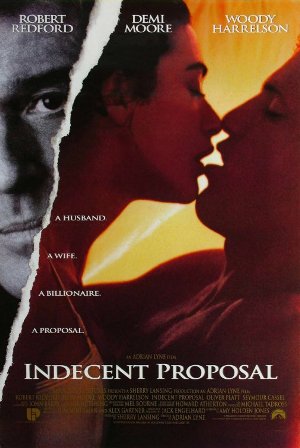
There is an old joke that actually got turned into a Robert Redford/Demi Moore/Woody Harrelson movie.  It is potentially off-color for some readers, so if you think you might be one of those readers, skip down past the image of the movie poster below and you will be fine.

A woman goes up to a man in a bar and asks him “Would you have sex with me for a million dollars?”

The man ponders this for a moment and replies that he would.

She then asks “Well, how about for $5?”

He is shocked, retorting “What kind of a person do you think I am?”

She smiles and says “We’ve established what kind of a person you are; now we’re negotiating price.”

indecent_proposal

The lesson from the above, other than it’s less funny to read written jokes than to hear them told, is that it’s better to get someone to decide how much to donate, rather than to have them deciding whether to make a donation or not.

Researchers have found in several studies that rather than talking about a million dollars, you can have success by talking about a penny – specifically, the phrase “even a penny would help.”

This technique has some impressive results.  One study of this in a face-to-face environment increased giving from 28% to 50%.

One could argue that the success of March of Dimes in their original launch was in part a variant of this.  Although a dime meant much more then, it still was a way of giving permission to lower level gifts.

The phrase fails Kant’s categorical imperative: if everyone did it, it actually would not help.  Your penny would be eaten up by credit card fees, postage, and acknowledgments.  And I have not used this technique extensively because I’ve been worried about the anchoring effect.  My concern has been that while response rate may go up, average gift would plummet and, as a result, we’d have more lower-value donors instead of fewer high-value donors.  The former can be a strategy, but isn’t the one I’ve traditionally aimed for.

But the evidence is that people actually give significantly more than a penny.  While gift did go down on average, the total revenue from the canvass went up 64% because of the increase in response rate.

Since revenue per communication is usually a pretty good way of measuring its success (in an ideal world, you’d want to measure its impact on lifetime value, but on a one-year time horizon, you go with what you have), I would call this a win.

I would go one step further in this to say that this technique would be best combined with others to give a reason for why a penny would help.  Potentially pairs I see:

  • With membership: we want to have as many members as possible so we have the political clout to pass legislation.
  • With petitions: as we’ve seen, the humble petition can be very effective.  And the petition can make the “even a penny” part of the pitch be secondary: “please return your petition today; your voice is vital to this important issue.  And if you could also send a donation – even a penny – it would help move this issue forward even more.”
  • As a lead gift variant: I haven’t seen this tried, but you could see saying “we have a lead donor who has made a gift of $X.  We would like to report back to him/her that his/her gift inspired 50,000 other people to give.  Even a penny would…”  My thought is that, like how the matching gift variant that an additional gift would be generated for every gift made worked, this would help impact response rate positively.  If you’ve tried this, please email me at nick@directtodonor.com; I’d love to feature a case study.

Here at Direct to Donor, we don’t even need a penny; what we would love is if you would sign up for the weekly newsletter that has a digest of this type of information, plus special bonus content each week.  Thanks in advance.

Validating small gifts to increase response rate

Mental accounting and the exception expense loophole

We’ve gone through a lot of cognitive biases recently, but one we haven’t talked about is the idea of mental accounting or budgeting.  The idea here is that dollars are fungible: your picture of a dead president and/or founding father on special paper can be exchanged for rent, coffee, donations, whatever.  In fact, money says that right on it: THIS NOTE IS LEGAL TENDER FOR ALL DEBTS, PUBLIC AND PRIVATE.

Onedolar2009series

Image credit. Dollah dollah bills, yo.

But that’s not how we think about money.  In our minds, we have special categories for each type of expense.  Think of it as separate jars into which we are putting our invoice: $1400 for the mortgage, $800 for food, etc.  We experience mental pain every time we have to rob from one cookie jar in order to put it into another, so we try not to do it.

Picture how you think of money; it probably is something like this.  In fact, some budgeting software (we use You Need A Budget at Direct-to-Donor Manor*) formalizes this process to make sure you don’t overspend in a category.  We get comfort from knowing that each month, there is $X set aside for eating out.

Your donors think this way also.  Somewhere in their minds, there are mental Mason jars with “CHARITY” written on them.  There may even be several such jars: one for each organization they support.

If you think of how your donors mentally account, the implications ripple outward.  This is part of why:

So how do we diminish the pain that a donor feels from robbing from their “movie” or “eating out” or “savings” mental accounts to give to us?  Part of this, as mentioned previously, can be framing the gift against the frivolous.  But another technique that breaks through mental accounting is framing your ask as an exception expense.

One quirk of mental accounting is usually there is an “incidentals” budget.  This is a “what happens if my 2003 Saturn Ion** chooses to give up the ghost today” contingency fund that we can dip into.

One study changed the frame on their annual event.  Instead of talking about their walk as an annual event that happens every year, they talked about it as an event that only happens once per year.

You have to admit, there is hardly any difference between the two of these phrases (and it’s always nice to run a test that will slip unseen past your Brand Police).

Yet the results were impressive.  By running Google Adwords with the new, unique, once-per-year framing, study participants said they would participate in the exception version at a 46% rate, compared with 35% for the annual framing.  When they ran the ad for real, people were 11% more likely to click on the exception framing ad.

Similarly, in the mail:

“This mailing is part of a special charity drive that happens only once a year. Alex’s Lemonade Stand is requesting only one donation a year going forward.”

Beat:

“This mailing is part of a regular charity drive that happens annually. The charity is requesting a donation every year going forward.”

Some implications of this research:

  • This can help immensely with your event advertising (and you are trying to get your direct marketing donors to your events and vice versa, right?).  But for us, we also are testing removing things like “10th annual” from the press activities around an event.  The idea of themes could also be potent as a way of differentiating this year’s event as its own unique snowflake.
  • This could explain part of the effectiveness of techniques like a membership campaign and a better way to frame said campaign: “this is the one special time of the year we ask all supporters to make their membership gift.”
  • This may explain as to why scarcity, urgency, and uniqueness are effective persuasive levers.  It’s challenging to use this framing if you are sending four to 24 letters per year, and your donor knows that.  However, techniques that increase urgency or uniqueness like matching/lead gifts, deadlines, urgent petitions, etc. can help give a reason to open the piggy bank.

This may seem to contradict the idea of consistency – that people give to the same campaign year after year.  I would argue that they complement each other.  If you are trying to get someone to do what they’ve done before, play back their previous history and lean into the fact that you and they have a history.  If you are trying to get someone to try something new, you have to figure out for them which jar to take it out of and why.

So go forth and be unique in your messaging; it seems to be a better strategy that appealing from the tried and true.


* I have received no endorsement money or considerations from You Need A Budget. But I’m open to it!

** This is absolutely your author’s ride of choice.  As I mentioned in the post where I outed myself as overhead, the life of a nonprofit person should be neither Bentleys or ramen.


Mental accounting and the exception expense loophole

But you are free not to read this post…

This week, we’ll talk about some framing that can help increase your donations or your likelihood of getting donations.

Some examples we’ve already covered:

  1. Framing your gift against a hedonic good works. That is, you can increase giving just by saying things like “that’s less than the cost of a Starbucks venti coffee.”
  2. Referring to something as a “small” fee can make people more likely to pay that fee. 
  3. Framing gifts in the context of social norms and social proof (e.g., circling a gift and letting people know that’s the average gift for the campaign) can increase the average gift significantly.
  4. Anchoring is just a pretty pretty frame you put around your desire to get larger gifts. 
  5. People are more likely to give to prevent losses than secure gains

The first one we’ll discuss this week is giving your potential donors freedom and agency.  It’s great in large part because it has a meta-analysis* behind it.

You can set up this freedom with a phrase as simple as “…but you are free to say no.”  Psychologists have a few different theories as to why this works.  One hypothesis asserts that as humans we crave control.  When someone asks us to do something (and, let’s face it, in a lot of our nonprofit communications, we lay the “why” on thick, as we should), we believe they are working to control us.  Refusal, then, is a reassertion of control.

Another hypothesis asserts that by telling someone that they are free not to do something, it feels as though we are giving them something. Reciprocity influence then demands that the donor give something in return.

I think it’s probably part of both of these, combined with a little bit of the unspoken “…but what type of person would you be?” at the end of the free to say no line.  Regardless of the exact mechanism, this technique has been shown to:

  • Increase donations face-to-face from 10% to 47.5% (study here
  • Increase face-to-face surveys completion from 76% to 90% (study here
  • Combine well with foot-in-the-door techniques (study here

And that meta-analysis says that the technique is effective across a variety of platforms. However, it did find that the effectiveness was slightly less in non-face-to-face ask situations; it also found that it is better if the thing you are asking a person to do (or not to do — it’s up to them!) is immediate.

So this is a technique you can add to your copy to increase donations.  If you’ve tested this, I’d love it if you can let us know your experience in the comments or at nick@directtodonor.com.  Also, if you enjoyed this, you may enjoy our weekly newsletter that covers topics like this in more detail.  But, of course, you are free to say no…


* A meta-analysis is research-speak for “we’re going to read all of the studies and summarize them for you in one paper.”  Think of it as the Cliff Notes if Cliff weren’t lazy and condensed all of Shakespeare down to one volume.


But you are free not to read this post…

Welcome step four: Setting up your systems

So you have your plan for your welcome series.  It is somewhere between 1 and n number of communications, depending on the person.  It crosses media where possible.  It thanks, learns, teaches, and asks.  And it honors the gift the person has given, while letting them know they can still be a bigger part of the change they seek to make in the world.

And it is worth nothing unless it is written down.

eyrha

You are working with a process that likely has:

  • At least three media (email, mail, phone) and perhaps more (mobile/texting, addressable ads, video, events)
  • Multiple vendors/systems involved (including caging, database, mail house, telemarketers, online communication systems)
  • Multiple points of differentiation, including medium, message, and high-touch v low-touch
  • Multiple people at your organization (you, donor relations staff, executives)
  • Intricate timelines.  For example, if you have three communications that you want in the order of thank you, learning about you/you learning about us, and ask, you really, really don’t want them to happen in the reverse order.  Also, every time you suppress someone from anything, things get complex.

This is not something that can be informal. In order for these systems to work together, you need to write out how.

Which does not mean you should write it in stone.  The basic principles should be (thank as quickly as possible, customize communications to the person receiving them, include both gratitude for what the person has done and opportunity to do more).  But how you accomplish them should be fluid with your testing regime.

I would say that the easiest way to create your process is to start with the simplest case and work your way up.  In this case, we have the rare example where ontogeny recapitulates phylogeny*.  So here’s how to build your program and your welcome/acknowledgment flowchart.

  1. Start with the most basic thank you by medium.  For an online gift, this is an email thank you; for an offline one, it is a mailed thank you.  Figure out how to get it out as soon as possible. 
  2. Customize those communications to the reason for giving.  A simple way to do this is to have a paragraph in the communication that changes based on the appeal to which the person gave their initial gift (since that’s usually the only information you have about the person at this point). 
  3. Create a special high-touch way to reach out to higher-potential-value donors.  This could be a policy of thanking all sustaining donors by phone or thanking all $100+ new donors and $1000+ existing donors with a handwritten card — whatever you are capable of doing.  This should be added to, not in place of, other thank yous. 
  4. Explore ways to break down your acknowledgement silos and thank people in different ways.  Put those that work into your process. 
  5. Add in a customized ask.  Yes, we’ve gotten this far before adding in an ask.  My thought is that a well-thanked donor is more likely to give to a regular-communication-stream ask than a poorly thanked one is to give to a specialized communication.  Also, you’ll note that this comes before creating a gap in communications (there likely already is one  that you can take advantage of) or learning about/educating your donor (I would rather have a less-educated donor who makes a second gift than a more-educated one who hasn’t).  This ask will be a bit more generic than we would like at this point, but you crawl before you walk. 
  6. Create your communication(s) to learn about your constituents.  These will usually be, but don’t necessarily have to be, separate communications from your acknowledgement and/or ask. 
  7. Create your if/then tree for customization from these learning communications.  That is, you should have something that says “if they are interested in advocacy, send them X paragraph in the ask; if they are interested in conservation, send them Y; if we don’t know, send them Z.” 
  8. Create the systems by which these changes will be implemented both for the ask as part of the welcome series and for all future communications. 
  9. Add communications from other media to the mix. 
  10. Create your timing for all of these communications, expressed in number of dates from the receipt of the gift.  I would encourage you to do a range, rather than an exact date for these communications — you may want to avoid having people telemarketed to on Christmas or on Sundays, for example.

Then, test the everlovin’ crud out of the system.  You are looking to break your system and then make it stronger at the broken places.  Some common things to test:

  • Do you have a plan, and only one plan, for every giving amount?  I’ve seen plans that say that donors over $100 get this communication and donors under $100 get this other communication.  They forget that a computer is going to be looking at this and ignoring people who give exactly $100. 
  • Do you have a plan for defaults?  Remember in most cases, you are not going to have additional information from the donor when you make your welcome series ask.  You want to make sure there isn’t a big blank space where paragraph three should be. 
  • What happens to your system if someone miskeys a code? 
  • What does your flowchart look like if someone does everything?  That is, you have paragraphs for people who are interested in various particular diseases, want to do advocacy, or have a personal connection to the mission.  What if they are all three, and they are a high-dollar donor?  The goal here would be to make sure you have prioritization and that you are not inundated with communications.  Remember that one of the priorities with your welcome series is to help the donor understand what to expect from you.  This should not be “I will expect to be annoyed.” 
  • How do your dates line up?  If you are integrating multiple messages and channels, you want to make sure that a person doesn’t get a phone call, mail piece, and email all exactly 21 days after their gift. 
  • How are you going to be able to handle the load?  That is, if you are going to be sending a getting to know you email seven days after the gift, will you be able to handle that on January 7th given your December 31st volume?  What?  You don’t have huge December 31st volume?  Let’s do a week on year-end fundraising at some point.

And you want to be vigilant to potential leaks even when you have this written down.  I have the privilege of working with a great donor relations person who keeps me apprised of the tone, tenor, and quantity of calls we get.  From this, she was able to discern that we were getting people calling (from a pattern of three people — like I said, she’s good) that already existing donors were getting member cards, something we include in our getting-to-know-you section of our welcome series.

What had happened was that our caging vendor had had instructions to send the new donor welcome letter to people who came in from acquisition mailings.  Since acquisition mailings often have lapsed donors in them that you are looking to reacquire, there were people who had donated for over 20 years who were being treated as if they were brand new to the organization.

Sovigilance

Image credit.

I will say that I have entirely failed to set up a welcome series for the weekly newsletter companion to this blog.  If you were to sign up for the newsletter here, what would you like to see?  Email me at nick@directtodonor.com; I’d love to use this as a test case.


* “Ontogeny recapitulates phylogeny” is the (mistaken) idea that we go through all of the stages of our biological evolution in development of our embryos.  The catchiest treatment of this I’ve seen is in Stephen Jay Gould’s I Have Landed, where he talks about how the drawings that supposedly prove this theory (like the allegation that we have gill slits at a point in the womb) persist in science textbooks.  It’s also the theme of his first book, which is a technical book and thus one I haven’t read.  In any case, I doubt his first book has any essays on Gilbert and Sullivan, which I Have Landed does, so that’s another point for the latter work.

Welcome step four: Setting up your systems

Welcome step three: Ask again

Now you have thanked someone for their gift, you’ve used both asking and revealed preferences to learn about your donor, and you have given your donor opportunities to learn about you.  Once all of this is established, you should ask again.

I’ve said earlier that the welcome series time doesn’t matter too much to me, as long as you are accomplishing all of these objectives.  I’m going to give lie to that here to say that you should be trying to get to this point fairly soon (within 15-30 days online; within 30-60 days offline).  Contrary to your intuition and the indignant cries of your board members that they would never give again so soon after making a first gift, this window is actually your best opportunity for getting that second gift.

And it is critical to get that second gift, for a couple of reasons:

  • Your likelihood of retaining a donor goes up significantly after a second gift.  This is why I advocate not looking at a monolithic retention rate.  Instead, it’s best to break down into retention among new, first-year, lapsed reinstated, and multiyear donors; the retention rates among these are really that different.  Indeed, that’s why on Monday I said that a one-time giver is not really a donor.  Retention rates after first gift are really that low.

  • The second gift sets the tone for the rest of their relationship with you.  Looking at one of the studies we’ve discussed on ask strings, you can see that first-time donors are fluid in terms of their giving. They are in a place where it is literally better to ask them for anything but what they gave previously.  Multidonors, on the other hand, need to be asked for what they were asked for previously.  Ask them for too little and they will downgrade; too much and they will not give.

1280px-Blacksmith_workingImage source here.
It’s a metaphor for a reason: cool metal hardens — only when it is hot is it pliable.

If you have done your welcome series/letter/email/whatever well, this ask should be natural.  You’ve learned about them, you’ve customized your ask to specifically what they want to hear about and who they are, and you know that what you are asking them for is something they will support.

Because of this, and because of the fluidity of first-time donors, I strongly advocate that this second ask be an upgrade in amount or degree.

After all, your ask now should be improved from your semi-blind graspings in acquisition, where your goal was to cast your net far and wide.

And you can drastically increase the value of your donor (to you and hopefully to them) by upgrading them to a monthly giver.

There are some who advocate for acquiring with a monthly giving ask (and, in fact, acquiring with only a monthly giving ask).  As I’ve mentioned, I don’t have the guts to try this yet, other than in means like DRTV where the medium is too expensive to try anything else.  (If you’ve done this, please write in the comments or to nick@directtodonor.com.  I would love to share your experiences with the readers of this blog and/or to read them myself).

But post-acquisition, you may have the perfect storm of factors to lead someone to become a monthly giver:

  • They are still in the glow of their first gift
  • You’ve created a customized experience for them
  • They have not yet become set in their ways of how they give to you.  We’ll talk more about mental accounting at some point, but suffice it to say that people have different boxes of finances in their heads.  Once you are in a box, it is difficult to break out of it unless the person’s finances or perceptions of you change.

We’ll dedicate a week to monthly giving, but you’ve already seen some of the tactics you can bring to bear in this upgrade ask:

It’s definitely worth testing against a more traditional upgrade strategy that would ask for a larger one-time gift.  So test away, but make sure both versions incorporate what you know about the donor.

Welcome step three: Ask again

Welcome step two: Learn more about your donors and engage them

You’ve now created a gap between now and your normal communication stream for your new donor.  What do you do next?  As any Londoner can tell you, you now need to

bakerloo_line_-_waterloo_-_mind_the_gap

We know in case after case that personalization increases the effectiveness of direct marketing.  And not just making sure the person’s name is spelled correctly: it’s about making sure you know why they are giving and are thanking and soliciting them under those auspices.

With a new donor, you will have a single data point with which to start.  They responded to theme A through medium B.  You can leg your way into donor knowledge as we recommend by changing one thing at a time, but that won’t help you get that second gift.  And even if you are doing well, 60-70% of the time, you won’t get that gift.

Previously, I’d talked about the two ways of getting information about your supporters: watching their behavior and asking them.  It turns out those are the two things you should be doing in your welcome communications as well.

The critical step, and the one most often missed, is setting up opportunities for behavior watching and for feedback.  Or sometimes we go to the opposite extreme and send an email for every little bit of our mission we can think of, drowning the donor or prospect with a deluge of did-you-knows.

The way to maintain that balance with your supporters is to give them three major opportunities:

  • To use you as a resource.  People are more likely to support organizations that solve their problem.  This can range from “I want to eat more sustainably but I’m drowning in a sea of cage-free, organic, cruelty-free, etc. labels and don’t know how” to “I donated to suicide prevention because a friend committed suicide, but now I’m having these thoughts…”.  We nonprofits are (or should be) experts in our area and we can help in these areas.  And, as a much secondary effect, it allows us to see our supporter as a person. 
  • To use you as means to accomplish their goal.  If they donated to a particular issue, they may also want to write their legislator about it — that may give them the same (or similar) warm feeling that donating did.  Or they may want to volunteer in a very specific way that helps them achieve the same end their donation did.


  • To learn what they think.  You want to know how you can serve them better.  This can be through a survey or an open-ended question.  Or this can be an opportunity to bring in a different medium by having a human call them, thank them, and ask for why they gave and why to you.

The larger point here is that these should be framed in how they help the donor or cause, not how they help you.  It’s amazing how much of a difference there is between “We are also on social media, so like us on Facebook and follow us on Twitter!” and “Our Facebook community helps parents of children with autism support each other, so please join in if you’d like to hear from others who have been where you are.”

It goes without saying that you should track these activities.  If someone sends back the petition in their mail package, advocacy is something that appeals to them.  Thus, the way to get them to be a higher value donor may not be to get a second gift through the mail (although you should try); it may be to get them to be a frequent online advocate, then ask them after an online petition to become a monthly giver to support the specific advocacy activities they enjoy.

It’s even easier online.  If someone clicks on your link for more information for parents of kids with autism, you know they almost certain fall into this category themselves.  This is a programmatic opportunity as well as a fundraising one, but all boats will lift if you have this information and use it to help the person in question.  Links that you send should be trackable and appended to each supporter’s record so you can customize your messaging.  

The alternative is to become the cable company that asks you for your phone number with their automated system, then has a person ask you for it, even though caller ID is a thing that has existed for a while in this universe.  If someone tells you something, they will expect that you know it.  And clicks are, believe it or not, communication.

There is a lot of ink and virtual ink used on how many emails or mail pieces you should have in a welcome series, how long it should last, etc.  You’ll notice that I don’t cover any of that here, because I don’t find it to be all that important.  If you can accomplish the thank you, learning, and engagement all in one communication, go for it.  On the flip side, as long as a welcome series is about supporters’ interests, it’s difficult to say that it is going on too long.

Welcome step two: Learn more about your donors and engage them

Step one in welcoming: the thank you

I’ve already done a week on thanking your donors.  Somehow, I managed to talk about why to thank people, rules for thanking donors, 50 ways to thank donors, and ways to thank people multichannel-ly.

And I didn’t talk about what should be in a thank you.

It’s a wonder you even read this blog — thank you for that.

One source to which I’m indebted for this week and many others is Roger Craver’s Retention Fundraising. It is a classic about how to retain donors that I can’t recommend highly enough.  He posits that there are seven drivers of retention:

  • Are you effective at your mission?
  • Does the donor know what to expect from interactions with you?
  • Are your thank yous timely?
  • Do you listen?
  • Does the donor feel s/he is a part of something important?
  • Does the donor feel appreciated?
  • Does the donor receive information about who is being helped?

These are the things you are trying to accomplish with your thank you, and with your welcome series.  Most of these apply to any acknowledgment, but they are most important for a first gift.

Remember emotion.  So many acknowledgments aren’t thank you notes.  They sound like they were written by someone trying to tell Sgt. Friday about your donation.

jack_webb_joe_friday_dragnet_1957

At 1430 hours, the suspect made a donation.
It was tax deductible pursuant to 26 US Code 170.

They are long on amount and date and making sure your name right and short on capturing anything related to the donor’s experience in making the gift.  As we’ve discussed, the vast majority of gifts are made not because of what someone thought, but what they felt.  The thank you know should respond to this in kind.

Specify to why.  Along the same lines, the thank you should not just replicate the emotion of the original, but also tie into the story and the reason for giving.  If someone gave with a petition attached, the thank you should reference the petition and how it is helping make a difference.  If they gave you their email address on the reply device, they should be thanked in both medium.  Ideally, the signatory of the thank you should be the same signer of the appeal letter.

Especially with a first gift, it’s important to establish trust.  Relating the thank you to the gift is a good way of establishing that trust.

Remember their past giving.  If they’ve been giving for 10 years, let them know you know that.  While not strictly related to welcome packages, it’s important not to forget this.

Prove the impact.  This also helps build trust.  If you said the donor’s gift would help build a well, the story and pictures, and emotional impact from the thank you should be related to the impact from the well.  Especially if you are not a name-brand charity, the donor is taking a chance on you doing what you say you are going to do with the donation.  Letting them know that you did helps build a relationship and ties them to the impact (not the output) they were hoping to have.

Remember, the donor wants to know who they helped and why that’s important.  Help them.

Differentiate.  A first donation is more predictive than any other donation.  If someone donates an abnormally high amount to your first solicitation of them, they are uniquely dedicated to your cause and/or of substantially greater means than the average donor.  Chances are good that you have a special procedure for anyone who gives over a certain amount (let’s say $1000) to your organization, whether it’s a phone call or handwritten note.  I would advocate you extend this to people whose first gift is abnormally high.  It may seem odd to extend the same treatment to someone who gives $1000 and someone who gives $100, but chances are good that that $100 donor is your $1000 donor of the future.

Do not delay for differentiation.  That said, you hear horror stories of processes for larger donors that delay their thank yous.  You may think I’m exaggerating here, but at the summer camp for future non-profit direct marketers, the counselors would shine a flashlight on their face from under their chin and say things like “And then the letters sat on the executive director’s desk.  And they sat.  And they sat.  And they sat.  For over. Three.  Weeks.”  We campers would not be able to go to sleep, knowing that our best donors were getting the worst treatment.

Perhaps I went to the wrong type of summer camp.

Anyway, there are four solutions to this dilemma:

  1. Light a fire under whoever is supposed to be writing or calling
  2. Pick someone else to do the writing or calling (or have a team of people to share the load)
  3. Use a quasi-high-touch solution like outbound voice mail or pseudo-handwritten cards
  4. Send a regular thank-you note immediately, then follow-up with a phone call or handwritten note

All of these have their merits, but I strongly recommend solution four.  Not only will this thank the donor twice, which is rarely a bad thing, but it will make your process independent of personalities.  I am a big fan of processes that work regardless of the people who are in them.  You may say your ED or board member is extremely punctual with their calls and letters, but this may not always be the case.

Test high-touch pieces below where you currently are doing them.  If you aren’t differentiating at all, well, now’s a great time to start.  If you are, I recommend a test of doing handwritten notes, phone calls, or other high-touch solutions to at least a segment of whatever half of your current threshold value is (so, if you do $1000+, try it with $500+ donors).  Track their giving over the next year and see if it pans out.

My guess is that, if your organization is like almost every other organization I’ve seen, three things are true:

  • Your current threshold was set by someone in the mists of time because it was a good round number that didn’t sound like an overwhelming amount of work for the person/people involved.
  • It has gone through little to no scientific inquiry in the interim.
  • There are touchpoints you can do that will raise the value of the next tier of donors that will justify the amount of work necessary.

There is a who-is-going-to-tie-the-bell-around-the-cat’s-neck problem with this solution.  I would recommend you, the reader of this blog.  Talking to contributors and thanking them for making important work possible is beneath no one.  You will likely not only get a lift in your response rates, but you will also gain vital donor intelligence that few others in your organization will get by having actual conversations with actual donors.

Turn off regular communications with new donors for a certain amount of time.  In the mail, this is easy.  Chances are you have already pulled the list of people you are going to be mailing 30-60 days from now.  Thus, a suppression emerges naturally (although you may wish to lengthen it).  For online initiates, there is a temptation to drop them into regular communications immediately.  

Don’t.

Remember yesterday’s post — you are looking to thank this person, learn about them, have them learn about (and perhaps interact in a non-donor context with) you, and make a strategic ask for a second gift.

If they are dropped into regular communications, there is a near-100% certainty that they will get asked with no learning, which is not strategic.

The amount of time is not really the important part; accomplishing your communications goals is, so you can test what the right amount of time is for you.  And, as Roger told you at the top, be sure to let them know what they can expect from you (and I would add “and allow them to change that default”).

What do you put in the interim?  Well, that’s what I’ll talk about for the rest of the week.

If you would like to get these weeks in digest form, please sign up for my weekly newsletter, where you’ll get not only context for these posts, but also my random neural firings and previews of upcoming posts.  You won’t want to miss it.

Unless you do and that’s fine too — I just appreciate that you are reading.

Step one in welcoming: the thank you