Setting your direct marketing budget anti-goals

Yesterday, I argued that the three things that matter in your budget are net revenue, file/program health, and cross channel/multichannel/omnichannel health (how much are you contributing to other fundraising and non-fundraising efforts.

That ignores some key traditional metrics.  And that’s intentional.  Here’s why:

Costs.  Many nonprofits look to minimize their overall costs (and believe you me, I have seen some nonprofits transcend lean and mean and become emaciated and ticked off).  But this is a fallacy in direct marketing.

Let’s picture direct marketing once again as if it were a magic box that you put costs into and got revenue out of.

If an additional $100 in the magic box brings you an additional $150 in revenue today, you should do that.  That’s covered by net revenue.

If an additional $100 in the magic box brings you an extra $200 next year, you should do that (unless you are in a hyperinflationary market).  That’s covered by program health.

If an additional $100 in the magic box brings you an additional .5% chance of a $100,000+ bequest (crosschannel health), you should do that.  That’s covered by crosschannel health.

The problem with overall cost as something you look to minimize is that it could ignore these three investment opportunities.  Don’t do that.

Gross revenue.  If the impacts on file and crosschannel health were the same, would you rather spend $2 million to make $4 million or $3 million to make $5 million?  Clearly the former, as you can getting more return on your investment.

Yet some nonprofits have a goal of “we will increase our revenues to X” instead of “we will increase our revenues to Y, net of direct marketing costs.”  The former gives an incentive to overspend at the expense of net revenue, program health, and crosschannel health.

This is yet another reason why Charity Navigator’s financial rates are so very, very flawed and actively counterproductive.  They have cost of fundraising in their model so that a 10% drop in ROI could cost you 2.5 points (out of 100 (actually 70 because they spot you 30 points)).

However, if that turns your organization into one that is growing substantially in income and program expenses as a result, instead of shrinking, you get an additionally 20 points (because revenue growth and program expense growth are two 10 points categories.  This is why Charity Navigator rated an active cancer charity scam three stars – because it was growing.  If you doubt me, here’s their rating from the handy dandy Internet archive.

Conversely, a charity that has encountered tough times will get zero points out of ten on both of these growth indicators, giving them two stars on financials or less, hurting that struggling charity in its efforts to work its way out of the hole.  I will at some point dedicate a week to the perverse incentives of Charity Navigator, which sets itself up as a watchdog but instead chews up your shoes and poops on your carpet.

Return on investment is important.  But it should be strived for, not budgeted for.  Later this week, you’ll see why, as we look to get to our optimal program.

So tomorrow, I’ll talk about the nuts and bolts of budgeting and some pitfalls to watch out for.

Setting your direct marketing budget anti-goals

Setting your direct marketing budget goals

So, you want to budget for your direct marketing…

Wait.  Scratch that.

So, you have been told to budget for your direct marketing.  None of us really want to set a budget.  Yes, you want to be able to project what communications and campaigns will do, the better to measure expectations for the future and learn from our successes and failures.

But the ideal direct marketing world would be one where there was not a number to hit, but rather a series of goals.  You would set up your communications and tests, learn from what was done, retool the program for the future given what you’ve learned, and get hot oil massages from attractive members of your preferred gender(s).

Back in the real world, though, it is imperative that our causes know what they can count on from the direct marketing program and, ideally, from the bridges you have created to events, major gifts, planned giving, monthly giving, and corporate outreach.  Someday, I will blog about multichannel attribution, just as soon as I feel like I’ve figured it out myself.  Or, to speed things up, if you think you have a handle on it, email me at nick@directtodonor.com and I would love to give you a guest blogging opportunity.

These budgets let us know what staff we can bring on, projects we can take out, people we can help.  It’s imperative that we set them and that we stick to them.

I would argue there are three relevant things for which to budget:

  1. Net revenue. Think of your direct marketing program like a black box for a moment.

    black_box-aeroplane

    No, not that type of black box.  Hopefully.  Our black box is magical.  You can put in $100,000 and get $200,000 out.  You can put in $1.8 million and get $3 million out.  And, most importantly, you can put in X and get out Y, because our magic box is algebraic.

    Your organization needs to know what Y minus X is – how much does the magic box add to the money that is put into it.  Or, but another way, this is how much extra are you contributing to the mission through your activities.

  2. Program health. Your number and quality of donors determine how good your black box is going to be in future years.  There is a point at which this conflicts with #1.  A good program will take a maximized net revenue and reinvest some of that to help sustain and grow the program in the future.  Simplistically, this means acquiring donors.  Beyond that, it also includes the tests that fail so you have the benefits of the ones that succeed, cultivation communications that may not bring in immediate revenues but set donors up for better things down the road, and other tactics that sacrifice net for lifetime value (e.g., acquisition of monthly donors).
  1. Crosschannel health. This is more difficult to measure, but it will be to your benefit to start trying.  That is, how much if what you are doing helps out with other efforts.  A good example is with planned giving efforts.  An ideal target audience for planned giving appeals are 70-plus year old “tippers,” who give to your organization often, but not much, and who have substantial assets that may not be known by your organization or even conventional wealth screening indicators (living in modest homes and neighborhood, little to no stock activities, certainly no M&A or Wall Street stuff, and few political donations).  This is also a borderline audience for most direct marketing activities – they require more expensive (mail and phone) solicitation, they are unlikely to convert to monthly giving), and models will show them to have low lifetime value.  But what value do they have in the long-run?  A focus only on net revenue and traditional RFM-based file health metrics will ignore folks like this.

Purists will note that there are several things that are traditionally part of a budget that I don’t include here.  But that’s tomorrow’s post – the things that people think matter, but don’t.

Setting your direct marketing budget goals

A direct marketing bridge to… monthly giving

I had the pleasure of hearing a speaker from Greenpeace talk about how you should never ask for a one-time gift.  In fact, he went so far as to say that you should turn down the one-time gift if offered because it is the wrong response.

I loved this talk, but I will freely admit that I lack the intestinal fortitude and the spinal integrity (guts and backbone) to try this approach.  Monthly giving is certainly more and more popular and more accepted in the United States, both with credit cards and with EFTs.  Electronic banking has helped with this; hacking scandals hurt, as you force everyone who shopped at Target (a purely hypothetical example) to change their credit card on your site.


2000px-target_logo-svg

I can’t imagine why hackers would aim for this company…

But it still seems like we have at least one technological generation of people to go before every gift will be a monthly gift (Greenpeace, with a substantially younger supporter base than the average nonprofit, may already be there).

So I will confess that this is the wimp’s guide to getting into monthly giving.

First, as with planned giving yesterday, plan out your systems.  Part of this is the giving society you have for monthly giving (and benefit levels, if you choose to have them or incorporate a membership concept).  But the major part is managing exceptions.

You want to have a plan when credit cards are declined to try them again, potentially twice.  Then, you want to have a plan to reach out to that donor to attempt to obtain their new credit card information and a continued gift (telemarketing and email, not in that order, are preferred for speed).  Failing all attempts to get them into a monthly cycle again, you want to restart the appeal process, ideally to rejoin the monthly giving society.

The best way to do this is to charge all of your credit cards on one day a month.  Which is another way of saying “don’t use Luminate CRM for your monthly gifts.”  I had the pleasure of meeting with my then Convio, now Blackbaud, rep about one time per year and every time I would ask them to create the ability to charge all on one day so you can automate the recapture process and coordinate it with offline monthly donors.  They would look at me with the same expression that a Labrador retriever would use to regard the space shuttle and say they had never heard of something so absurd and no one else in history would ask for such a thing.

While just meant that I talked to more of their customers than they did because most people I talked to bemoaned the lack of single day processing.

So you want an online and an offline system for processing your cards and EFTs in place and a system for following up on declines.

Now, as for getting monthly donations, you should definitely have monthly giving incorporated into your online strategy and as much a focus of your donation forms as you can without giving away net.  You should also have it mentioned in direct mail pieces, especially in acknowledgment follow-ups (a good opportunity for a buckslip for the people who aren’t getting the planned giving one) and donor newsletters.

But telemarketing is the best means I have seen of getting a bulk audience of monthly giving donors.  Modeling your donors helps immensely. Your donors who already use online banking, who are receptive to telemarketing, and/or who do frequent online ordering are going to be good targets for this. Also, your telemarketing vendor should have a history of who paid by credit card in the past.  I’m not saying the people who send checks in for a pledge will be entirely useless for monthly giving, but I will say they will be mostly useless (for this; they are lovely people who are doing great work through great causes).

Since I’ve been critical of Blackbaud above with my Luminate ravings, I will say that I’ve had good experience with the Target Analytics Group’s telemarketing receptivity index.  I’ve found that it does a good job of separating out among people who haven’t given by telemarketing to find who is most likely to (that said, everyone who had given a gift in telemarketing before outpaces everyone who hasn’t in terms of calling).

One weird data anomaly – when I did sustainer calling, the best performing group were the people who had given through telemarketing to us, but rated low on the TAG telemarketing index.  We hypothesize that these were our special little snowflakes who we knew gave through the phone, but no-one else did.

Use a follow-up ask in traditional telemarketing. While you can and possibly should do telemarketing strictly for monthly givers, you can work with your callers to ask for a monthly gift after they have the credit card information from a donor.  The script would go something like “Thank you, Mr. Hinx, for your donation of $40 today.  Before I process that, would you like to be part of our [name of monthly giving society]?  It’s for especially loyal donors who make a gift each month on your credit card that you can cancel at any time.  I could set you up for a donation of $10 a month instead of your $40 donation today?”

The divide by 3-5 to get the monthly gift is a pretty good rule of thumb.  Before I had a lot of online giving experience, I took our average offline gift, which was about $28 at the time, divided it by 12 to get $2, then set up an ask string of $2, $4, and $8 for a monthly gift.  The average monthly donation on that form was almost $10 – the first and only time I’ve had the average gift be higher than anything on the ask string.  So learn from my idiocy.

In fact, if I had to rename this blog today, I could do far worse than LearnFromMyIdiocy.com.  It is available, but at some point, I’m going to have to blog about how rebranding is almost never the answer to a fundraising question, so Direct to Donor it is.

Thank you for reading once again.  Please let me know what you’d like me to cover next at nick@directtodonor.com or in the comments below!

A direct marketing bridge to… monthly giving

A direct marketing bridge to… planned giving

If you look at a planned giving consultant’s guide to how to approach planned giving, direct marketing will be a significant part of it.  In fact, they will want to take over the entirety of your direct marketing program.

It goes without saying that you shouldn’t let them, for the same reason your three-year-old does not get to pick what s/he eats.

However, there are intelligent ways to use your direct marketing savvy to cultivate planned giving prospects.

In order to market your planned giving society, you need to create your planned giving society (contrary to popular belief, my master’s is in marketing, not the obvious).  That is to say, you need to give your society a name (even if it’s as simple as the [Your Organization Name Here] Legacy Society) and let people know what will happen when they join by letting you know they have named you for a bequest.

In addition to creating the society, you need to create the systems to handle inbound queries by phone, mail, or email.  The person or people that help with this need not have legal training – in fact, it will likely help you avoid acting like a lawyer if you are not one – but should have a knowledge of different types of instruments for giving.  At its simplest (which can you shoot for if you are just starting up your planned giving program), you can start with just wills/bequests, of which there are few variations:

  • A fixed amount of money
  • A percentage of an estate
  • A fixed amount of money after X is taken care of (X can be family, friends, other charities, etc.)
  • A percentage of an estate after X

Pretty simple; don’t let the lawyers complicate it.  This can be a part where a direct marketer can help.  We are used to boiling things down to a low reading level and making abstruse concepts understandable (for example, by not using the word “abstruse”).  Research shows that complicated words like “charitable remainder trusts” and “bequests” can scare people away when we really mean “making a will.”

The systems you create should be fairly simple as well.  You should have a response system for whatever means they contact you for people who are considering a planned gift and one for people who have told you they have designated one to be made.  For the latter group, you should show them the love – donor newsletter, customized copy in mail and email pieces, recognition and regular thank you’s.  You want these donors to have guilt if they choose to remove you from their will.

Once you have your inbound systems in place, it’s time to work to attract planned giving donors.  You are looking for similar quality here as we talked about for major givers.  In fact, planned giving is a common fallback from a major gift ask (“I realize you may not be in a position to make that gift of eleventy billion now; would you consider us in your will?”).  To summarize for those who have not memorized the canon of this blog, you are looking for loyal, long-term donors, or those who have demonstrated a deep passion in other ways (e.g., volunteering, a large initial acquisition gift).

And you are looking for people who are older.  Planned giving experts will tell you that you should start with people in their 40s and 50s, because these are the people who are most likely to be putting together their first will or thinking seriously about this.

This may be true.  But there’s not one single other investment you can make at your nonprofit where you will say “now, all we have to do is wait 30-40 years and we’ll start to see if this investment paid off.”  Nor should there be.  For one, you lack effective testing data (reporting of leaving in a will is only a middling indicator of actually leaving in a will); for another, the time value of money has eroded so much over that time as to be negligible.

And, as a fundraiser, not one single person will pat you on the back for the bequest in 2058 that you set up with your marketing today.

So I would suggest a much older age selection for your planned giving prospects.

Then, planned giving experts will tell you to mail and call this entire file.  Also, car donation experts will tell you to mail and call your entire file about donating your car.  Everyone wants you to spend your money on their thing.  I haven’t seen anyone advocate a telemarketing campaign to get people to use text to donate, but I’m sure I will.

Instead, save your money by piggybacking on pieces you are already doing.  Donor newsletters are a great place to put planned giving information because those are the loyal donors who are most likely to participate.  Similarly, you can insert a planned giving buckslip into your acknowledgment envelopes for people who are in your target audience much cheaper than you can for a single mailing.

Now take the money you saved and run another donor acquisition campaign.  You’ll do more for planned giving by having a larger file with better donors than you will having a one-off planned giving campaign.

So those are bits of the direct marketers guide to planned giving.  Tomorrow, we’ll wrap up the week with the bridge to monthly giving.

A direct marketing bridge to… planned giving

A direct marketing bridge to… cause-related marketing and sponsorship

What, you say?  Corporate is a completely different silo in our organization from direct marketing.  It’s not even like major gift officers where they are working from the donor files we create – corporate relationship folks are working directly with C-level execs from companies, not people who started out as $15 donors.

Au contraire, mon ami.*  Direct marketing can be useful in helping secure relationships with companies that didn’t know they wanted to partner with your organization.

The first step is to append your file with as much data as you can get your hands on, if you haven’t already done so.  You are looking for:

  • Demographic data – age, sex, income variables, etc.
  • Political data – which candidates someone gives to is a matter of public record. This has almost nothing to do with reaching out to corporations but is something you should have on file from a data perspective, as people who donated to political campaigns are significantly more likely to donate (and donate more generously) to nonprofits.
  • Purchasing patterns
  • Interests

Ideally, you would also survey your list(s).  This is done most inexpensively online and can help you get a feel for the demographics of your online supporters and event participants.

From this, you may already see some potential partners emerging.  If your core constituency has an unusually high percentage of people who drive motorcycles, your corporate development folks, armed with these data, can make a more effective pitch to those companies.

This list, and your information about it, is your gold mine for the corporate world.  Assuming that there is not a strictly philanthropic reason for them giving to you, they are generally interested either in what partnering with you will do for their brand among a certain segment or segments of their customers or potential customers or in what your constituents could be persuaded to do with them in a cause-related marketing relationship.

Even in the first instance, your list is your gold mine because companies will assume that if you have, for example, heavy support among 35-55-year-old women, their 35-55-year-old female customer base might think highly about their support of you.

There are a couple of key factors in these relationships, though.  First is never to give up control of your list.  You can allow the partnering company to mail, phone, and even email your list (assuming your privacy policy allows it) with an offer for a cause-related marketing or affinity promotion done jointly with you.  But it needs to be your list, with your control over when and how it is communicated with, with no ability for your partner to simply absorb it into their list of information about their customers or into a prospect list.  In fact, you will want to introduce some dummy constituents into any files you share, even under an NDA and the strictest legal contracts, to make sure a list not used without your knowledge or consent.

The second is to make sure as the nonprofit, you are not responsible for the heavy lifting.  These cause-related marketing programs abound, with people more than happy to give you 10% of their sales, as long as your constituents enter promo code RIVERRUNpastEVEandADAM.  As a nonprofit, you are only ever able to acknowledge the relationship, state the nature of the relationship, and thank the company for their support.  You are not able to, and should not be able to, sell a product effectively.

And any partner that truly values you as a nonprofit will not ask you to do so.  The ideal relationship is one where the company values their relationship with you and promotes it as you thank them and appreciate their support.

Direct marketing can also help you acquire cause-related marketing.  Remember the ability to target specific individuals with your advertising? Look for your corporate sales team’s target list and market your programs and efforts to this audience.  They will think you are massive and omnipresent, when in reality you only could be with their support.

Additionally, your email list can help get you contacts at key companies, by looking at the .com portion of the address.  You don’t necessarily need to have the CEO on the list; the right janitor who believes in your cause may be willing to help you navigate to the right person at their company or help arrange a lunch and learn with the corporate staff.

So your direct marketing list and tactics can help you in the cultivation, success, and execution of corporate programs.  Good luck with this and please share any success stories in the comments!  Thanks!


* French for “That’s some straight up bull”

A direct marketing bridge to… cause-related marketing and sponsorship

A direct marketing bridge to… major gifts

Direct marketing specialists and major gift specialists seem to be opposites in style and approach.  One is impersonal, mass-market, with knowledge of the aggregate not the specific – the marketing equivalent of the Air Force; the other is all about personal relationships, forged one on one, with intimate knowledge of that one person you are pitching – the equivalent of boots on the ground Army or Marines.  This can often cause them to be rivals in the same ways the service branches are; they can also work together to accomplish a mission together like the service branches.

As a direct marketer, developing a small budget to a major gifts program is part defensive.  I once worked with a major gift officer who would mark a donor as no mail, no phone, and no email the moment they got on her radar screen.  Not only did this deprive us of the only real source of revenue we had from these donors, but it also deprive the donor of the information that was tethering them to the mission and tugging at their heart strings.  And when she left, we had no way of differentiating real unsubscribes from these unsubscribes of pseudo-convenience.

This is going to happen if you can’t create a positive experience for potential major donors in your direct marketing program.  Yet it can happen and it can cost tens or hundreds of thousands of dollars for the nonprofit.  There are only two reasons to stop communications with your potential major donors in this way: 1) if they ask you to or 2) you have a relationship with that donor to the point that there is a substitute communications strategy and ask framework in place.

So your role in direct marketing is to build the relationship with the donor over time.  This doesn’t necessarily mean a slower cadence; rather, it means different types of pieces, including a donor newsletter telling them about their accomplishments – the true impact of their giving.  It can also include higher-touch, higher-value communications – handwritten notes or cards, invitations to special events or briefings, or the like.  These can enter the communication stream gradually as your relationship builds.

Direct marketing is also a great vehicle – in fact, a primary vehicle – for identifying those donors who may be receptive to a major donor ask.  While some amount of wealth is certainly a necessary condition for a person to be able to make a major donation, the more important thing to the organization is the tie to the organization.  People often forget this.  If I had a nickel for every time a nonprofit brainstorming potential targets thought of hitting up Bill Gates or his foundation because of a friend of a friend, I would be blogging about what yachts are the most fun to waterski behind.

bill_gates_july_2014

If this man is your major donor strategy,
you do not have a major donor strategy.

What you are looking for is:

  • Giving history – long, repeated, multiple gifts per year, and increasing gift amounts
  • Participation – telling a story, coming to an event, volunteering
  • A clear passion for at least one aspect of your mission either from his/her giving history or participation

The one exception to this is people who make unusually high (whatever this is for your organization – probably between $100 and $1000) first gifts.  This is probably a person who has been interested in your cause for a while or has an important reason to start giving now – they may be ripe for personal interactions as much as your loyal long-term donors.

Looking at this compact list, you can see that you can not only help solicit major donor prospects, you can help create them.  This is by incorporating upgrade strategies into your communications.  If you have well-defined recognition for different levels of giving (and you should), you can make those aspirational, especially for those on the cusp of reaching them, by making the ask for the next highest level of recognition.  Those recognition levels should also be a prominent part of your mail, phone, and online communications, as well as your acknowledgments for these donors.

Finally, remember to thank extremely well.  If you are at lost as to how, check out 50 ways to thank your donors.  Some are usual, some are a bit nutty, but they may spark some ideas to giving your major donors and potential major donors the love they deserve.

A direct marketing bridge to… major gifts

A direct marketing bridge to… events

Direct marketing for nonprofits is usually a tool to get a donation.  This week, I’m going to look at the ways you can build bridges to other development areas to help that famous rising tide lift all boats.

I’ll start with peer-to-peer fundraising events, in part because of the degree of difficulty.  Event participants and event donors are notoriously difficult to convert to other forms of giving.  Event participants feel like they gave as part of the event (and they did); event donors are giving more to their friends than they are to the cause.  And the vice is versa’ed – demographically, your average direct mail donor is not likely to want to do your endurance three-day, less she break a hip.

True story: I once participated in a charity 5K that started and ended on Federal Hill in Baltimore.  Here is the view from the top of Federal Hill where we started the walk:

250px-federalhillpark

And here is the view from the bottom of Federal Hill up to the top:

mount_kilimanjaro

Hat tip to wikimedia.org for the images

We had a lot of people stop at the 4.9K mark that day.

Where was I?  Oh, yeah.  Walkers don’t convert well.  But in acquisition, we are certainly reaching out to less likely prospects.  With walkers, you know they know who you are and believe in the mission.  You may even know a bit about why they are walking.

So they are an audience worth reaching out to, both to garner additional donors, and to improve their retention for future year’s walks.  Some of these ideas will be applauded by your walk managers as helping them do their jobs; some will have you burned in effigy for trying to “steal” “their” donors.  The trick is to do enough of the former that they will forgive you for the latter.  Here goes:

  • New walker welcome kits (online or off). With most walks, your immediate communications are “thank you for signing up; here’s how you can make money for us.”  This would help mix in messages that welcome the person to the mission of your organization beyond welcoming them to the walk.
  • Similarly, during the walk process, mix in other topics like advocacy alerts to deepen engagement to the organization.
  • Try a telemarketing cycle to your walkers well after the walk is completed. This can both ask for a donation and announce the day and time of the next year’s walk.
  • Addressable media to past participants. Remarketing, cotargeting, and like audiences can be a good way of retaining old walkers and bringing in new ones.  If you don’t know what I mean, I highly recommend Friday’s post on just this topic.
  • Throughout the year, you should try mailing walkers to become offline donors. Ideally, this would feature walker specific messaging and incorporate what you know of why they chose to walk.  Strong techniques could include a walk survey to gather data on your walkers (and to act as a reply device) and a save the date lift note for the next year’s walk.

Because of the inherent national/field friction in some national organizations, I would strongly recommend running these techniques as a test in year one with sites that are willing to experiment.  Using the other sites as a control, you can then present how much better the direct marketed to walks did versus those that didn’t have the wind at their back from email, online, mail, and telemarketing.

A direct marketing bridge to… events

Targeting people online (along with a sneaky trick for low-cost CPC ads)

If you are a privacy advocate who doesn’t believe the Internet should be following you around, this is not the post for you.

In fact, if you don’t think the Internet should be following you around, the Internet may not be for you and you’d probably do well to shut it off now.

There is a famous New Yorker cartoon from the early days of the Internet when you could call it cyberspace or the information superhighway non-ironically.

on-the-internet-nobody-knows-921x1024

That simply isn’t the case anymore.  With cookies and tracking technology, the Internet not only knows you are a dog, but it knows what butts you have recently been sniffing.

OK, that analogy went somewhere unpleasant but suffice it to say that ads follow you around the Internet and learn your behavior.  Read about the uncanny valley-esque level of personalization that can result here.

Additionally, sites with log-in functionality – Google, Amazon, social networks, and so on – not only know where you’ve been going, but who you actually are IRL (in real life, which used to be a cool acronym, but isn’t anymore because I just used it).

As consumers, we can blanch in horror and retire to our fainting couches.  As marketers, there is a significant advantage to be had here.  So here are four tactics that work with the new new media.

Remarketing.  This is what happens when you go to a site, then leave, then ads follow you around the Internet saying “would you like those shoes you were looking at now?  How about now? Maybe now?” until you want to go back to abacuses. While you were on that site, they put a cookie on your computer, which lets that site and other sites know where you were.  They then spread the word to the ad network that so-and-so was this close to buying shoes.

I make this sound sinister, but which would you rather see: an ad for something you are interested in or a random ad?  Personally, I like that advertising is at least trying to be relevant.

What works for shoes can work for your nonprofit.  With a few simple tools provided to you by remarketer (there are a number of them, including AdRoll, Bing, Chango, Google, Google properties like YouTube, Retargeter, Perfect Audience, Wiland, etc.; if you want a review of some of these sites, try this Kissmetrics blog), you can put a cookie on your site and begin asking the people who have come to your site if they’d like to take the next step.

Cotargeting.  Google, Facebook, Twitter, and some outside firms like Wiland will now allow you to upload your list of donors, newsletter subscribers, volunteers, or whatever other group you want to target, with their email addresses.  The match rates for Google and Facebook are really quite impressive (hat tip to Wordstream)

Then, these services will market your message to those specific people.

It’s like we are living in the future.

The next step (and it’s started pilot testing, as I understand it) is for your TV box (whether cable or satellite or cord cut or whatever) to customize as well.  I applaud this development.  I’m a semi-avid football fan who does not drink beer and will never own a truck.  Eighty percent of football advertising is wasted on me.  It would be lovely to say to those companies “you save your money; I’ll save my time” and we part as friends.

You’ve heard me preach multichannel/omnichannel-ness on this blog; now you have a way to replicate and reinforce the messages you are giving out through other media through advertising.  Your broadcast messaging just became a direct marketing one.  Huzzah.

Lookalike audiences.  Remarketing and cotargeting can help you get the people who have already sought you out.  Lookalike audiences are people who are very much like these people, according to the model of whatever ad networks you are using.  This way, you can try to acquire donations from the people who look like your donors and Web traffic from people who look like they would like your site.

The supporter cards that Wagner was processing in Des Moines were feeding into the computers at Strategic Telemetry’s Capitol Hill office.  Those commitments, along with some traditional polling, had already helped to refine Obama’s back-of-the-envelope vote goals in Iowa.  But the real power of Strasma’s black box, like all microtargeting models, was extrapolatory: the names of whose had signed supporter cards went in, and out came the names of other Iowans who looked like them.  These algorithms were matched to 800 consumer variables and the results of a survey of 10,000 Iowans.

– Sasha Issenberg, The Victory Lab: The Secret Science of Winning Campaigns.

Low-budget advertising.  I promised you a trick on Tuesday and earlier in this very piece.  The trick is a two-step process:

  1. Use an ad network that uses cost-per-click advertising rates and places ads by the amount you are willing to bid, rather than on the amount of gross revenue they are going to make (that is, don’t use Google or systems with Google-like quality scores).
  2. Create bad ads. That is, create ads that get your message out, but without the call to action.  Let’s say you target people who are getting your matching gift mail piece, email, and telemarketing with an ad about your organization and the good work that it is doing (think of the ads that run during the Sunday morning news shows that have slogans like “BP: We barely even have oil anymore”), but doesn’t mention clicking, a matching gift, a donation, or anything else that would encourage a click.  This way, you can put up your online billboard and get the awareness and good feelings from it, but not be charged to have it up.

This is certainly a short-term strategy, but can be used to boost a campaign in a pinch.

Hope you enjoyed online acquisition week.  In honor of it, I’d create ads to follow you wherever you go, but since I don’t really have a revenue model yet, that would be kind of counterproductive (“I’m advertising to try to get people to come to a site that I don’t make money on.” “How do you hope to get money from that strategy?” “Volume!”).

Please let me know at nick@directtodonor.com or in the comments what topic(s) you’d like to see in the future.  Thanks!

Targeting people online (along with a sneaky trick for low-cost CPC ads)

Creating content that converts

Over the past couple of days, I talked about Google Grants and other CPC search engine tactics for driving people to your site.

But nothing beats getting people to your site without paying for them (or Google paying for them for you).  That’s where having quality content coming in.

There are three layers to having quality content in the sense that I’m using it – content that gets you to the conversion you are looking for.

First, the content has to be attractive to machines.  That is, a person looking for the content has to be able to find it on the Internet through search engines.  There is a whole science to this called search engine optimization and plumbing its depths is a topic for another time.  However, you can get a good portion of the way there by looking the keywords that you’ve selected for your CPC ads.  Focus on how many times they are searched for and how well they convert for you.  From this, you should get a strong perspective on the types of content people are looking for and what they want answered.  You can then write that content, using the keywords that people use to find such content.

I use write here even though there are other types of content that are not in written form.  However, to be searched for effectively, there should be some sort of written aspect that corresponds to your video, audio, picture, etc.  Search engines deal best with the written word.

Second, the content has to be attractive to people.  This probably goes without saying, but your content has to be on a valuable topic and written well.


Chris_Hemsworth_3,_2013Having attractive imagery or people in your ad will likely also help.
Thanks for the assist, Chris.

Third, the content has to make a person want to take the next step.  What that next step is is up to you.  You can approach it either with the end in mind (“I want people to email their legislators through our advocacy system; what would make them want to do that?”) or from what is in the content (“I have this white paper here on the dangers of bovine flatulence; what would be a logical thing to do as a result of this”) – either way works.  The latter is good for a content audit: collecting all of your assets and determine their use.  However, if you are starting from scratch, it’s probably best to have the end in mind when you set virtual pen to virtual paper, lest you write a great piece that don’t achieve your goals.

While I’ve done quite a few blog posts here on the site now with little else, it doesn’t really pay to have the same type of content or same type of next step over and over.  Varying your content types is a good way not only to prevent your constituents from getting board, but also segmenting your constituents for the future – e.g., this cluster like action alerts, these like surveys, etc.

I mention action alerts and surveys, because these are two generally nicely converting content types, because their existence is set up to cause people to interact with them.  Others include polls, pleas to share your story, petitions, contests, etc – anything with a form on it or a question is going to be a bit better at capturing constituents than anything without.

Speaking of, I’ve been writing mostly on things that interest me; what interests you?  I’d love to do a day or a week on the topics that would be more valuable to you.  Simply leave a note in the comments below or email me at nick@directtodonor.com.

Creating content that converts

6 intermediate cost-per-click techniques

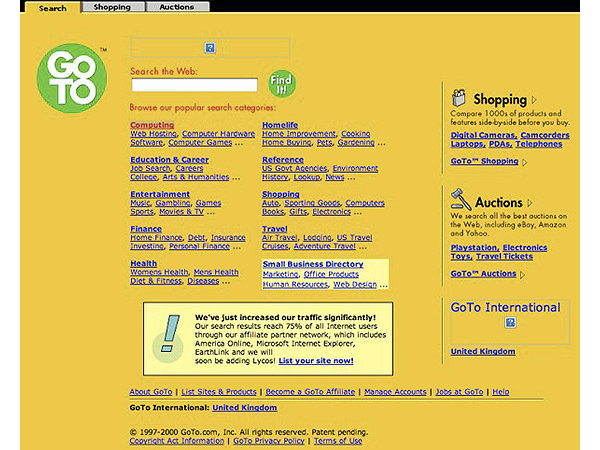
The original cost-per-click (CPC) search engines did their listings strictly by what you were willing to pay per click.  (I actually used Goto.com for CPC listings, before it become Overture Services, before it became Yahoo! Search Marketing.  Nothing like Internet time to make one feel old).

500004804-03-01

Yes. This was once a thing.  A big thing.

Google’s algorithm, however, takes the quality of the ad and the site into account.  This is partly because you will come back if you have positive experiences on the site and partly because it maximizes profits.  For the same reason that you would look at gross revenue per mail piece/phone contact/email/carrier pigeon instead of just response rate in isolation, Google looks at gross revenue per ad shown as the backbone of its infrastructure.

Thus, it is in your interest to maximize your click-through rate (except in one very special case I’ll discuss on Friday); you can pass your better bidding brethren by beating them on quality.  Hence the focus on things like negative keywords and phrase matching yesterday: you want to get your clicks on as few ads as possible.  An average quality score from Google is a 5.  If you are at a 10, your cost per click goes down by 50%; if you are at a 1, it goes up by 400%.

Targeting smarter also helps you get clicks from the people from whom you want to get clicks, instead of those who didn’t understand what they were getting into from your ad.

So here are a few techniques to help get to the next level of pay-per-click success:

Check in on your keywords regularly. This should be at least weekly; daily would be better.  It doesn’t have to be for long, but Google will keep giving you helpful tips on additional strategies and keywords to try.  You can also see what is performing and what isn’t, retooling ad copy for underperforming ads and learning which landing pages aren’t converting as well.

Set up conversion tracking.  In the beginning, Internet advertising was sold in CPM – cost per thousand impressions and the earth was without form, and void.  Then came CPC – cost per click – where you pay for an action, rather than a view.  The ultimate is going to be cost per conversion, where you only pay when you get a donor (or other person you are desiring), and you can set your goals accordingly.  Companies won’t want to do this because they have to rely on you to convert, rather than themselves, but it is semi-inevitable.

You can have this advantage right now if you set up conversion tracking.  You will be able to see how many people convert and, if they give donations, how much you get from the campaign.  Seeing how much you get from a campaign ahead of time, then bidding, is like playing poker with all of the cards face up – it’s remarkable how much better it makes you.

Unbounce your page.  Not every page converts well.  With conversion tracking set up, you can tell if your page is repulsing potential constituents.  Testing with Google solutions or a solution like Optimizely can help you convert more people and lower your CPC costs as your quality score goes up.

Set up dynamic keyword targeting.  A person is more likely to click an ad that has the exact words that they put into the search engine in it.  The trick is that people put all sorts of things into search engines.  With dynamic keyword targeting, it doesn’t matter if they put “rainforest deforestation,” “rain forest deforestation,” “tropical forest deforestation,” “destruction of the rainforest,” “tropic rainforest deforestation,” etc., into the search bar, you can add those specific words into your ad.

Geotarget your ads.  This is especially true if you are a nonprofit with a limited geographic reach.  If you are an early childhood intervention provider in Dallas, you likely don’t want Seattle searchers.  However, this applies even to national and international nonprofits.  If you have chapters, or state-specific content, you can direct those specific searchers to the area more relevant for them.  This works especially well for things like walks and other events, where people will likely only come from a certain distance around to the event.

Go for broke.  If you do get a Google Grant, try to use every cent.  Not only will it get you more traffic, more constituents, and more donors, but it will also allow you to apply for more money.  Your first steps to worldwide nonprofit domination await.

I hope these are helpful.  Please leave any tips you’ve found useful in the comments section below.

6 intermediate cost-per-click techniques