Meet the new Charity Navigator. Same as the old Charity Navigator…

Last week, Charity Navigator released its new 2.1 rating system after reassessing its financial ratings.  This was an approximation of my reaction:

248578-full

I’d heard about Charity Navigator 3.0 and thought that maybe they would finally start focusing on nonprofit results.  But then they tried to use their lack of expertise to judge the logic models of experts in the field.  I argued then as now that I would trust the American Heart Association on how to prevent heart disease more than Charity Navigator, just as I would trust the doctor or nurse in the ER more than an intern at the hospital’s accounting firm.

I was hopeful with this effort was euthanized.  And I’d hoped that new leadership and time would change things.  But then their new leadership said that (in essence) mail may not make sense for nonprofits (story here).  As if we need less money to go to noble causes, not more.

Then they surveyed nonprofit leaders about the effectiveness of their metrics.  I gladly participated, telling them what were their most and least helpful metrics (answer: they were all tied for least helpful, in that they are not just not helpful but counterproductive).  Again I hoped for change.

What we saw on the first were a couple of tweaks: the manicure to a patient with a sucking chest wound.

This is frustrating, but I believe in the idea of giving insight into nonprofits for those who want it.  Like companies, people, or governments, there are good nonprofits and great nonprofits and scam nonprofits and blah nonprofits.

And I like that nonprofits are stepping up to do this.  When governments have to get involved, we too often see a cleaver used instead of a scalpel.

Charity Navigator’s own accountability and transparency metrics are very strong and helpful (other than the misguided view of what a privacy policy is).  When you don’t have things like an independent board, systems to review CEO compensation, regular audits, and so on, there’s a good chance you might be a scam (or very young as an organization).

But Charity Navigator continues to prop up the overhead myth, as described here.  While this is the most grievous sin, it is by no means the only one.  Thus, this week, we’ll take a look at why you should not only ignore the Charity Navigator financial metrics, but actively do the opposite.

With the new Charity Navigator ratings, program expenses are on a rating scale instead of using the raw value.  This focuses even more on the fallacious overhead rate, giving greater emphasis to differences among nonprofits.  In my post on the overhead myth, I talked about how a focus on overhead generally will prevent a non-profit from making the investments needed to grow.  Now, let’s look at a specific case of how focusing on fundraising expenses hurts growth, that of diminishing marginal returns.

Perhaps like me your econ class was at 8 AM, so let me explain with a thought experiment. Let’s say you were going to do a mailing to only one person.  You’d clearly pick out the best possible donor to send to — the person who gives you a significant donation every single time.

Now, let’s say you found an extra couple of quarters in your couch and wanted to mail a second person.  You’d find another person who is almost as good as the first — maybe they give a significant donation 99% of the time.

Let’s repeat this 10,000 times.  Now you are getting into people who are either less likely to donate or who will likely give smaller gifts.  Your revenues per mailing sent will still be very good — it will more than pay for itself by a wide margin — but not as good as that first person.

Now repeat 100,000 times.  The potential donors are getting even more marginal here.  But your expenses have barely gone down.

This is diminishing marginal returns in action.  As you try to reach more people and grow, your outreach becomes more probabilistic and less profitable.  

But it’s still profitable. (In the real world, you would hopefully be looking at this along the donor axis rather than the piece axis, asking if each piece added to lifetime value, but let’s not gum up the thought experiment).

If you had a magic box into which you could put $1, and get $1.10 in lifetime value out, should you do it?  Many of we fundraisers would be putting money into that box like a rat designed to get a, um, pleasurable experience when it pushed a level.  And we’d be right to.  More money = more mission.

But by focusing on the cost of fundraising, CN would have you cut off at the 10,000 mark (or not to mail at all).  Less money, fewer donors, less mission.

That’s the starvation cycle in action on the fundraising side of things.  And it’s made even worse by Charity Navigator’s stubborn refusal to allow for joint cost allocation of joint fundraising/programmatic activities, which we’ll cover tomorrow.

Meet the new Charity Navigator. Same as the old Charity Navigator…

Who is the hero of your story arc?

Going back to Aristotle, drama has been described in rising action, climax, and falling action (or, in his words, protasis, epitasis, and catastrophe).  Even now, when a movie is good, even great, for a while (*cough*cough*Spectre*cough*cough), but doesn’t have a satisfying ending, we call it a third act problem.

The German playwright Gustav Freytag formalized this in Freytag’s pyramid for a five-act structure:

2000px-freytags_pyramid-svg

I was skeptical of how much this could have an impact today.  After all, as we said with the donor pyramid, all pyramids are lies.

But research backs this up.  Keith Quesenbery, a researcher at Johns Hopkins, looked at 108 Super Bowl commercials and found that people were drawn to the ones that had a five-act narrative arc like a Shakespearian play.  In fact, from this, he was able to predict the most effective 2014 Super Bowl ad in ratings and, apparently, in sales.

What does this tell us about how we should structure our nonprofit stories?  With this type of narrative, clearly.  Good stories like this release oxytocin in our donors’ brains and oxytocin is related to increased giving.

But how?  

If the pyramid doesn’t speak to you, perhaps Wall-E or Woody or Lightning McQueen will.  Former Pixar storyteller Emma Coats tweeted out (speaking of, her feed is a wealth of storytelling ideas) story rules for Pixar films.  #4 was:

Once upon a time there was ___. Every day, ___. One day ___. Because of that, ___. Because of that, ___. Until finally ___.


Think of how this fits a tradition nonprofit story:

Once upon a time there was Janice.  Every day, Janice would pick up her kids from school.  She’d ask them how their days were.  Joan said “fine” every day and little Jake would talk a mile a minute until they got home.

But then one day, Janice found a lump in the shower.  She forgot to ask her kids how their day was, so preoccupied was she with this discovery.  So she went to her doctor, who gave her the news.  She’d caught it early.

She decided to fight.  Her whole family decided to fight.  And fight she did.

It’s five years later now.  She still picks her kids up from school.  But today, she’s going to celebrate — five years cancer-free.  She’ll be walking to end all cancer.  Will you?

This is not a bad story.  Granted, it lacks a certain what you might call… quality — details and action verbs and things that will create a fleshed out narrative.  You can picture it being an appeal letter or email.  And it’s a strong narrative.

So I encourage this type of five-act structure as you build out your campaigns.

But that’s not the end of this story.  Here’s the M. Night Shyamalan twist ending. (Hopefully early Shyamalan.)

Who is the hero of this story?

The person you are talking to — the potential donor — enters the story in the last two words of that appeal.  Two words.

What if you took that same narrative structure and made the donor the hero, or at least a parallel hero?

Three years ago, every day, you would go to the mailbox and see a phone bill or a Sharper Image catalog you would never order anything from.

One day, you got a letter. It asked you to save a life.  And you, being a kind and generous person made a gift, to see what type of an impact you could have.

Because of that, because of you, Janice knew how to perform a self-examination.  Because of that, because of you, Janice was able to get the care she needed.  And now, she’s cancer-free.

And it’s not just Janice.  Because of your support over the past seven years, there’s been research that will help other survivors survive.

Together, I know we’ll keep saving lives and helping people.  Until that great day when your support takes down all cancer, now and forever.

Which do you think will raise more?  I’d say they’d be about even as they stand; we need to get some of that emotion from the first piece into this one.  But it’s a philosophical shift we can make to engage better.

Who is the hero of your story arc?

Make your donor fill in the blanks

What’s brown and sticky?

This is my wife’s favorite joke in the world.  And it puts me in mind of the power of either asking the person who gets your communication to fill in the blanks or evoking their curiosity, compelling them to read on.

Of course the answer is at the end.  How would I do a blog post about building interest through questions and not put the answer at the end?

While it may be fatal to our feline companions, curiosity is a basic human motivator.  Jerome Kagan, one of the forefathers of development psychology found in a 1972 paper that what he termed “uncertainty resolution” is a primary motivator of human behavior.  We are hardwired to want to know.

This can work to our advantage in direct marketing.  More and more research indicators that the donating decision isn’t a yes/no dyad; it’s a series of microconversions that lead up to the act of pulling out the credit card/checkbook/wallet/etc. and giving the gift of a life saved or changed.

Our goal, then, is to shepherd the potential donor through the little steps that lead to that big step.  One of these is often the decision to open, whether it’s a physical or virtual envelope.

A good question in a subject line or intriguing statement in teaser copy can help draw in a prospect.  One of my favorite subject lines of all time was one that was intended to show our gratitude, but could be read one of two ways:

Look what you’ve done

When you opened the email, it was telling the story of what the person’s support had meant: the small dent they put in the world that year.

But I’d be surprised if at least some of the people who opened it (and it had a 25%+ open rate) didn’t think we were saying:

jerk

Incidentally, you might think of this as a bait and switch, but not shockingly, no one complained about being tricked into being thanked profusely.

You can also create an information gap.  Think of the teaser of your local news: “Coming up after the break: what common household object could kill you today?”  Sometimes, asking the question that your email aims to answer can get people to read and read all the way through.  Just like brown and sticky things.

There’s a specific manifestation of completionism that is particularly interesting.  It started with Austrian waiters.

See?  “It started with Austrian waiters.”  You can’t help but read on to resolve the uncertainty that comes with a statement like that.

Psychologist Bluma Zeigarnik was watching waiters in Vienna.  She noticed that their memory was astoundingly good for orders that were in progress, but very bad for those that were already served.  She went back to the lab and found that our memories work well for unfinished or incomplete things (know as the Zeigarnik effect).  Subsequent testing has shown it works best for tasks that are very important to a person.

There are a good number of ways to deploy this:

  • Don’t put a period (or God help you, an exclamation point) on the end of your subject line.  Punctuation there (other than a question mark) signals that the thought is complete and you need not read on.
  • Test out two-step opt-ins.  This is the not only the perfect compromise by the people on your Web site that want to reduce form friction and the ones who think you need your participants middle initial and blood type (you don’t; the first people are right).  Simply have the person fill out the most basic information on the first screen (usually just email address).  Then ask for some of the important information on screen two, with a big friendly opt-in button (note: it should not say opt-in) right there for the taking.
  • Finally, you should end your content with an idea that the content will continue on in another letter, post, email, etc..  There’s a reason every Bond movie ends with “James Bond will return” — there’s always more to the story.  So tune in tomorrow for the end of story week when we talk about story arcs and hero’s journeys.


* What’s brown and sticky?  A stick.

Make your donor fill in the blanks

What the Greeks have to teach us about fundraising rhetoric

Classic rhetoric structures almost always have no place in fundraising letters.  We govern largely in prose, not poetry.  In an effort to simplify, the flowery and verbose take a back seat to hard-punching Anglo-Saxon words of action.

But there are a few classical rhetorical devices worth knowing for even the humblest of appeals.

The first is that we tend to remember things in opposing twos and common threes.

For those of you keeping score at home, having opposing pairs is called antithesis.  The most famous of these is “It was the best of times; it was the worst of times.”  Many forget that Dickens then went on in that vein for quite some time, showing that he was paid by the word.

These opposing pairs can be a powerful way of setting an expectation and then denying it.  An opening sentence could be something like “Mary and John had long dreamed of owning their own home; little did they know that dream would become a nightmare” then going on to talk about the predatory lending practices that did them in and how you want to solve them.  While not a true antithesis (as those tend to have the same rhetorical structure), we tend to remember pairs of things.

We also remember three things if they are in a similar structure (known as tricolon).  We wouldn’t remember how Julius Caesar took Gaul if he just said “check Gaul off the list.  Conquered it.”  But because he came, he saw, and he conquered, it’s memorable.  We remember Churchill’s blood, sweat, and tears.  What we forget is that Churchill actually asked for blood, toil, sweat, and tears.  Even a master rhetorician as he went a rhetoric bridge too far.  We aren’t equipped to remember four things together.

14c14v

For our purposes in writing, the rule of three often applies well to adjectives.  A strong three adjective pile-up can add emphasis, focus, and detail to a sentence.

An additional rhetorical device that is very useful is intentionally grammatical mistakes (catachresis, if you are feeling fancy).  Some effective ones:

  • Saying “over” when you technically mean “more than.”
  • Avoiding your brand speak (e.g., ® and ™ and capitalizing many a word, as if they were special)
  • And starting sentences with “and” or “but.”

When in doubt, ask if it’s how people speak.  If it is, you are probably fine.

Yes, your copywriters will run a river of red ink through these.  Ignore them, unless they are prepared to pay you the difference in donations.

Finally, alternating hypotaxis and parataxis can be effective at getting people to think about what they’ve read.  In English, this means mixing up your long sentences with subordinated clauses (your flowery sentences designed to evoke a mood) with short ones.  This breaks up the mind and allows for some rest between longer orations.

Most of the other rhetorical devices you can keep; a fundraising letter full of alliteration or written in iambic pentameter is too cute by more than half.  But these help keep attention.  And that’s our goal.

What the Greeks have to teach us about fundraising rhetoric

The four American stories

Your English teacher probably told you at some point about types of stories: man versus man, man versus nature, man versus society, etc.  English teachers like this may or may not be why so few movies pass the Bechdel test.

hickey-bechdel-11-0

Anyway, there is a taxonomy of storytelling I prefer to these types of conflicts — it’s the four American stories discussed by Robert Reich in Tales of a New America.  Those stories are:

  1. The mob at the gates.  The enemy is out there and we are in here.  We are a beacon to others, but we are fragile unless we arm ourselves against the barbarian horde who want to destroy us and our way of life.
  2. The triumphant individual.  This is the person who made her own bootstraps and pulled herself up by them.  These stories include pluck, grit, gumption, not to mention moxie and spunk.  It’s hard works, late nights, and early mornings.  It’s Abe Lincoln and Ben Franklin and Horatio Alger.  It’s Rocky and Rudy and the venerated entrepreneur.  
  3. The benevolent community.  This is neighbors coming together to help.  It’s the end that we are generally good at heart and will come together as one people to solve the tough problems.  
  4. The rot at the top.  These can be aristocrats, bureaucrats, banks, the 1%, the conspiracy of the day.  These people in high places are corrupt, decadent, and reckless and the keep their boot on us all.

In their raw forms, these are the intersections of two dichotomies: optimistic versus pessimistic and few versus many.

Few stories are only one of these and powerful ones intertwine them.  A classic example of these is the ebb and flow of the fortunes of George Bailey in It’s a Wonderful Life.  In one scene, he defends his bank on his own (triumphant individual) against a bank run (the mob at the gates) engineered by Mr. Potter (the rot at the top) and triumphs when his neighbors agree their money is best kept in their neighbors’ houses (the benevolent community).  

So, how do you craft your nonprofit’s story and people’s places in it?  Some implications:

  • You want to yin with your yang in temperament.  An unrelentingly positive communication leaves no thought that there is still a need.  An unrelentingly negative one makes a person want to take a bath, not try to create their own hero story.  I would recommend making sure you are both heroing your donor (whether you cast them as the triumphant individual or part of the benevolent community depends on their personal bend) and talking about the threat you face, whether from without or within.
  • Like temperament, I also find that it’s good to have few versus many in opposition.  True, two evenly matched individuals or equally sized armies can make for good stories.  But when one individual stands up for what is right against the masses (there’s a narrative reason we like when the crowd isn’t chanting Rocky’s name at the beginning of the fight, especially when fighting godless Commies) or when a people throw the bums out, you have a truly gripping story.  
  • Everything that isn’t in a category here is noise.  You’ll note that there isn’t a storytelling category for talking about how great your programs are, for the same reason that the benevolent community story of a barn-raising doesn’t dwell on the awesomeness of the hammers.

Tomorrow, we’ll talk about some tricks to make your story more compelling.

The four American stories

How long should a story be?

Long enough, and no longer.  There!  That was a quick post.

I just realized that I’ve referred many a time about telling quality stories, but haven’t gone into a lot of detail on how.

So that starts today with length of your story.  I like this topic partly because I get to quote Jeff Brooks’ Fundraising’s Guide to Irresistible Communications:

“I’ve tested long against short many times.  In direct mail, the shorter message only does better about 10 percent of the time (a short message does tend to work better for emergency fundraising).

But most often, if you’re looking for a way to improve an appeal, add another page.  Most likely it’ll boost response.  Often in can generate a higher average gift too.

It’s true in email as well, though not as decisively so.”

In addition to emergencies, I’ve personally found shorter to be better with appeals where urgency is a main driver (e.g., reminder of matching gift deadline; advocacy appeals tied to a specific date) and institutional appeals like a membership reminder.

Other than that, length is to be sought, not avoided.

This is counterintuitive; smart people ask why our mail pieces are so long.  And it’s not what people say themselves.  There is a recent donor loyalty study from Abila where they indicate that only 20% of people read five paragraphs in and only seven percent of people are still reading at the ten paragraph market.

Here’s a tip: if you are reading this, this data point is probably not correct.

The challenge with this data point is that they didn’t test this; they asked donors.  Unfortunately, donor surveys are fraught with peril, not the least of which is people stink at understanding what they would do (much better to see what they actually do).  We talked about this when talking about donor surveys that don’t stink.

Other questionable results from this survey include:

  • Allegedly the least important part of an event is “Keep me involved afterward by sending me pictures, statements on the event’s impact, or other news.”  So be sure not to thank your donors or talk to them about the difference they are making in the world!
  • 28% of people would keep donating even if the content they got was vague, was boring, talked about uninteresting programs, had incorrect info about the donors, and was not personalized.  Unfortunately, I’ve sent these appeals and the response rate isn’t that high.
  • 37% of donors like posts to Twitter as a content type.  Only 16% of donors follow nonprofits on social media.  So at least 21% of people want you to talk to them on Twitter, where they aren’t listening?

So length can be a strong driver and should be something you test.  But you want the right type of length.  Avoid longer sentences and paragraphs.  Shorter is easier to understand, and therefore truer.

Instead, delve into rich detail.  Details and active verbs make your stories more memorable.  And that helps create quality length, and not just length for length sake.

And don’t be afraid to repeat yourself in different words.  Familiarity breeds content.  It also helps skimmers get the important points in your piece (which you should be underlining, bolding, calling out, etc.).

This may not seem like the way you would want your communications.  Remember, you are not the donor.  Especially in the mail, donors who donate like to receive and read mail.  Let’s not disappoint.


After posting this, I heard a great line in Content Inc that stories should be like a miniskirt: long enough to cover everything it’s necessary to cover, but short enough to hold interest.  So I had to add that as well…

How long should a story be?

Online advertising metrics basics

You may be saying “Mr. Direct to Donor, why would I read this?  My online advertising budget is limited to whatever I can find between the couch cushions.”

First, please call me Nick.  Mister Direct to Donor is my dad (actually, Dr. Direct to Donor, DDS, but that’s another thing).

Second, knowledge of the basic online advertising metrics, along with a deep knowledge of what you are willing to pay for each type of constituent or click, can help you bootstrap an online marketing budget by making investments that will pay off in shorter timeframes that you can get offline (usually).

So, first things first.  Online advertising is dominated by CP_s.  The CP stands for “cost per” and the _ can be filled in by C for click, A for acquisition, or M for thousand.

(Yes, I know.  It should be “T is for a thousand.”  However, youmille-feuille_franc3a7ais_1 can do that most American of things — blame the French — for this one.  M technically stands for mille, which is French for one thousand.  You may have encountered this in the dessert mille-feuille, which is French for a cake of a thousand sheets, or in the card game Mille Bourne, which is based on being chased by a thousand angry Matt Damons.)

The big question for advertising is “one thousand what?”.  In this case of CPM, it’s impressions.  You are paying whatever amount (the average is $3-4 right now) for one thousand people to see your ads.  It’s basically like every other advertisement you’ve ever seen (pre-Internet) where you buy a magazine ad from a rate card or TV ads based on how many people are watching.

With this new thing called the Internet, however, you don’t need to pay this way in almost any case.  You can measure at a greater level of interaction, so most advertisers will allow you to pay per click, especially in the areas of greatest interest to we nonprofit marketers like search engine listings, remarketing, and co-targeting.

But even that is not enough control for some, who wish to pay to acquire a donor (or constituent) and that’s where cost-per-acquisition comes in.  This is not as popular as CPC, as the publisher of the ad is dependent on you to convert the donation or registration, but has maximum advantage for you as an advertiser.

What you are buying in each successive step closer to the act that you want to achieve (usually donation) is certainty.  With CPA (also CTA or cost to acquire), you know exactly how much you are going to pay for a constituent; with CPC, you know how much you are going to pay, assuming this batch of people converts like the last batch; with CPM, you are spraying and praying other than your front-end targeting model.

The beauty of this level of control is that it can be used to justify your budget.  There are vendors who will run CPA campaigns where they get all of the initial donations from a donor.  Assuming they are reputable, these can be of great value for you, because you then get to keep the second and subsequent donations (that you will get because of your excellent onboarding and stewardship process).  Others will charge a flat CPA; if your average gift is usually over that CPA, you can pull in even these first donations at a profit.  Some are even doing this for monthly donors, where you can calculate a payout and logical lifetime value.

Once you have those running, you now have the budget (because of your additional net revenue) to look at CPC ads.  If you have your donation forms running and effectively tested, you should be able to net money on these as well, by targeting well and testing various ad copy/designs and offers.

So use your knowledge of ads to help bring in some extra money that can be used for… more ads (if profitable)!

Online advertising metrics basics

Judging your online file

We’ve gone over email, Web, and constituent metrics so far — now we need to look at how your online file stacks up.

imageThe easy, and lazy, metric is file size.  There is a certain type of person — and I’m not going to name any names or get political here — that always thinks that bigger is better.  And that yuge…  I mean huge… is better than bigger.

I would be lying if I had not seen this used as a case for investment at some points.  There is no small amount of power in standing up in front of a board (which is, sadly, more older white men than we should probably have as a society at this point) and saying “your X is too small.”  That X stands for “email file size” is not entirely relevant at that point.

These people, whoever they may be, because I have too much class to single out any one particular person, are wrong.  File size is a vanity metric.  It makes you feel good (or bad) but doesn’t impact performance.

Deliverable file size is a skosh better.  Here, you subtract out people who have unsubscribed, hard bounces, people who haven’t opened an email in a significant amount of time, and other malcontents.  At least this can’t be gamed (in the long term) by going on fiverr.com and paying five bucks for thousands of email subscribers, Facebook likes, Twitter followers, etc.

But ideally, you want to take your file size and overlay your value per constituents.  If your advocacy constituents are worth $1 and your information-requesters are worth ten cents, a file that is 90,000 advocacy folks and 10,000 requesters will be worth a lot more than vice versa.  So, deliverable file size by actionable segment is probably the thing to shoot for.

But more than that, you need to look at those segments by how you get there and where you are going.  This means looking at the positive side (growth) and negative side (churn).

I’ve professed my love of the M+R metrics report here, but there’s one thing I don’t 100% agree with.  They say:

Our job is not to block the exits; our job is to throw the doors open and welcome people in.

They put this in the proper context in the next line: “You should be paying more attention to growth than churn.”  But this doesn’t mean you should be paying no attention to churn.  You want to make sure that people aren’t leaving in droves, especially if they implicate one of your acquisition strategies.  For example, if 90 percent of the people who sign a petition aren’t on your file in six months, you are either doing a bad job of retaining them or you likely didn’t want them anyway.

But, as M+R says, don’t lose a lot of sleep over churn.  The two recommendations I have are:

1) Customize your exit plans.  Many of the people who unsubscribe from you don’t want to unsubscribe as much as they want a different email relationship with you.  That may be something you are able to provide with segmented emails, fewer emails, etc.

2) Do electronic change-of-address maintenance of your file so you can recapture all of the people you want to get back.

I also like to look at online list by origin.  Sometimes, increasing online subscribers from one means of acquisition (e.g., e-append) can mask weaknesses in others (e.g., organic conversion).  There is no ideal here, but it’s good to see some diversity in origin.

Finally, make sure you are measuring the share of online revenue you get from email. You want to stay in a Goldilocks zone here.  Too little from email and your emails aren’t effective in driving people to take the most important action on your site.  Too much from email and you aren’t attracting new people to the organization.

Judging your online file

What is the value of an email address?

There are any number of ways to acquire an email address.  Change.org or Care2 will run cost-per-acquisition campaigns with you.  You can do online advertising (paid or Google Grant-ed) that drives people to your site.  You can e-append your offline constituents in the hopes of further cultivating your relationship with them.  And there’s organic — getting people to come to your site, then getting to sign on the line that is dotted.

These all have one thing in common: they cost.  They cost in time, treasure or both.  So you need to know whether the effort is worth it.  And for that, you need to be able to put a price tag on a constituent.

This is anathema to some.  Witness our (fake) debate on whether we want more donors or better donors: there are some intangibles that are, well, intangible.

But we are judged against numbers.  Our goal is to raise money and make friends, in that order.  So let’s quantify what we can.

While we are attaching caveats to this, let’s also stipulate that you should do this exercise both for your average email address (since you won’t always know from whence your constituent came) and for as many subsegments as you can reasonable do.  The value of a Care2 advocacy person will be different from an organic advocacy person, which will be different from someone who is looking for information on your site, which will be very very different from an offline donor or a walk donor that you are working to make a multichannel or organization donor.  Each will have its own value and price.

So I’m going to describe the exercise for how you would do a generic email address; the principles are the same for any subsegment.

The first step is to determine the lifetime value of the person’s online donations.  Again, I’m going to eschew attribution modeling as very complex — do it if you can, but if you can’t, you are in the right place.

denslows_three_bears_pg_3

You might think, as I once did, that the way to determine this is to take the online donations you have for a year and divide by the number of email addresses.  However, this ignores that many of your donations are made by people who are not online constituents (and may never be).  So this estimate will be far too high.

You might think, as others I’ve seen do, that you can derive this by totalling the amount given by the amount given to ask emails throughout the year.  However, this ignores that your email may stimulate a desire to give that is fulfilled on another device, another day, and even by another method (more on that later).  Counting just donations given directly to emails will give you an estimate that is too low.

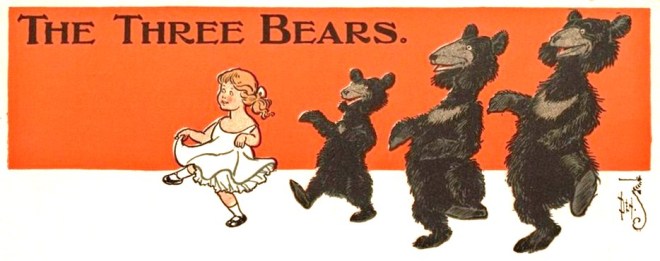
So those are the Papa Bear and the Mama Bear solutions; what does Baby Bear say is just right?  I would argue that you should count the donations given online by those who were signed up for and receiving emails at the time of their online gift.  This too will be an overestimate — you might have received some of those gifts if you didn’t have those folks as constituents.  However, it’s much closer than the Papa Bear model and, as you will see from having run your numbers on revenue per page from yesterday, a constituent gift is far more likely than a person-off-the-street gift.

You also need to factor in the lift that online gives to other channels.  I recently saw an analysis of an e-append that still has double-digit increases in both response rate and average gift of the mail donors four years later.  And this included people who had since unsubscribed.  So properly written and targeted emails can be a strong retention tool.

You can look at your file and see what the offline donation and retention rates are for people for whom you have email addresses and those who don’t.  The challenge is that these are likely to be different types of people.  You ideally want to compare someone to themselves before you had their email address as well as a control audience.

That’s why I like to look at e-appends of the past for this.  You can determine:

  • Value of average donor before e-append who got appended
  • Value of average donor before e-append who didn’t appended
  • Value of average donor after e-append who got appended
  • Value of average donor after e-append who didn’t appended

From that, you should be able to derive the lift that email itself gave.  (If you need the formula, email me at nick@directtodonor.com; it’s a bit boring to go through in detail here.)

Similarly, for events with online registration, the good news is that a lot of walkers fake their email addresses or don’t give you one.  How is that good news?  It gives you a nice experiment.  Take the people who gave you their emails versus those who don’t and their return rates and gifts given/raised amounts.  My guess is that being on your email list should increase both retention and value.  These too can go into the lifetime value hopper.

Now you have a formula to got back to your analysis of pages.  Maybe those advocacy participants of today are likely to be your donors of tomorrow.  Or maybe your Change.org advocates didn’t convert the way you would like in the long-term.  These will help you make choices around investments, pages, and people.  Hope it helps!

What is the value of an email address?

Web metric basics

We talked yesterday about email metrics; now it’s Web site metrics’ turn.

We start here with the most generic of all online metrics: traffic.  No less an authority that FiveThirtyEight says that we still don’t know how to measure Web traffic. The difference is how unique visitors are measured versus total visits.  If you are an advertiser, you want to make sure the 1,000,000 visits a person is claiming to her/his site aren’t just a guy hitting reload over and over again.  This can be done by cookie, by IP address.  

My advice on this is sacrilegious for a metrics guy: don’t worry too much about it as long as you are using a consistent system for measurement.  I’ve used mainly Google Analytics for this, because it’s free, but any system will have its own way of determining this.

From this number, you can derive revenue per visitor by simply dividing your annual online revenues by your number of visitors to determine revenue per visitor.  This is a nice benchmark because you can see what all of your optimization efforts add up to; everything you do to try to get someone to a donation page, what you do to convert them, your average gift tweaking, the value you derive from your email list — all of it adds up to revenue per visitor.

But more than that, revenue per visitor also allows you to see what you are willing to invest to get someone to your site.  Let’s say your revenue per visitor is right at the M+R Benchmarks Report 2016 average of $.65 per visitor.  If the average blog post you do results in an extra 1000 visitors to your site, you should in theory be willing to pay up to $650 to write, deliver, and market that blog post (because revenue per visitor is an annual figure, so acquiring someone at cost that you can then engage in the future is a beautiful thing).

I say in theory because revenue per visitor varies based on the type of content or interaction.  I’ll talk about this at the end because we need to go through the other metrics to break this down more efficiently.

A close cousin to revenue per visitor is site donation conversion rate, or how many of the people who come to your site donate.  Instead of dividing your annual online revenues by visitors, you’ll divide the number of donations by visitors.  This is one of two key inputs to revenue per visitor (the other being average gift) and is a good way of testing whether wholesale changes to your site are helping encourage people to give.  

I recently worked with someone who put a thin banner at the top of their site encouraging donation.  He was disheartened because less than half a percent of the people who came to the site clicked on the banner.  I asked him if the total clicks were additive to donation clicks (that is, they represented people who wouldn’t have clicked to donate otherwise) or substitutive (that is, total donation clicks didn’t go up; they just moved from another donate button to this bar).  We were able to tell not only because of the donation clicks went up over baseline, but because the site donation conversation rate went up.  Now we are working on a strategy to test this bar throughout the site and with different context-specific asks.

Drilling down from the site donation conversion rate is the page donation conversion rate.  This is people who donate to a donation page divided by visitors to your donation page.  It’s a standard measure of the quality of your donation page.  This and average donation on a donation page combine to create the revenue per page.  

Revenue per page is not only a good way of measuring which donation form is better — it’s a good way of getting a feel for the valuable content on your site.  See how many of the people who come to a page end up donating directly from the page (you can do sophisticated attribution models to determine this — going directly to a donation is a quick and dirty way of doing it) and what their average gift is.  Divide that by the number of visitors you have to that page and you can see what the revenue per page is on a non-donation page as well.

This is great information to have.  Let’s say the value of a visitor to your home page is 10 cents, to a program page is 20 cents, and to an advocacy page is 40 cents.  This helps you make decisions about your content.  Do you need better calls to action on your program page?  What should be your next home page feature? (Answer: probably something about advocacy)  Where should you direct the bulk of your Google Grant traffic?  Etc.

However, there is one thing missing from all of this.  You will note that I said site donation conversion rate and page donation conversion rate.  Usually metrics folks won’t put donation in there — it’s implied.

But there’s another conversion rate that’s vitally important and that’s conversion to a constituent.  Remember that the conversion to donation process often is a series of smaller steps.  You need constituents who subscribe to your email newsletter, volunteer for your activities, and read your social media posts (OK, maybe not that last one).  A person has given you permission to talk to them is a valuable thing and should not be forgotten about.

So there’s also a site constituent conversion rate and page constituent  conversion rate — how good are your pages at capturing people.  Only when you have this to add to your revenue per page do you have a true measure of page quality.

But wait!  How do you add people converted to revenue?

That’s the topic for tomorrow as we discuss how to value a constituent.

Web metric basics